Narratives of the Western Cameroonian Grassland
Apply the attributes of Western Cameroonian (Grassland) artefacts to design
Artefacts & Innovation
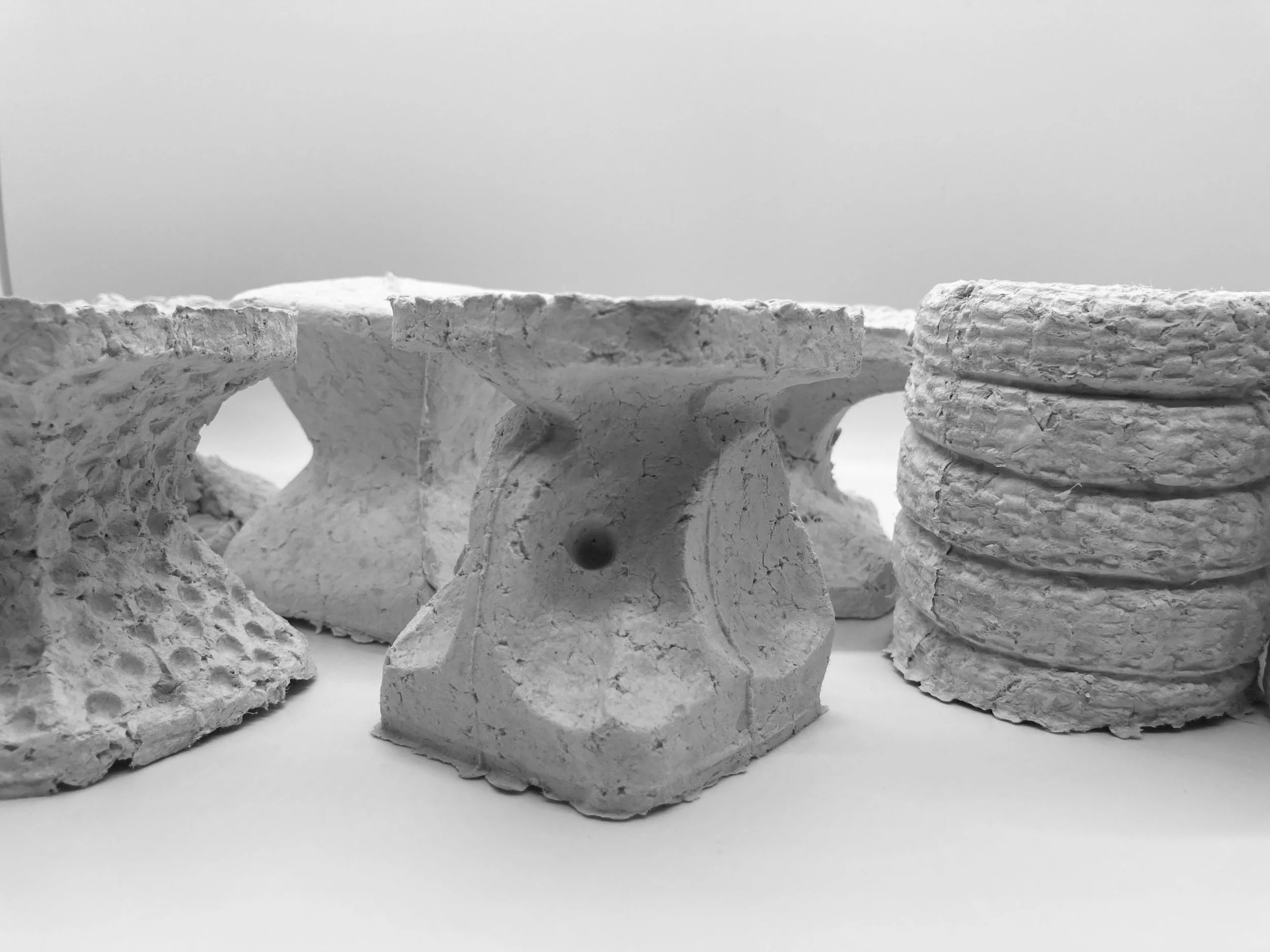
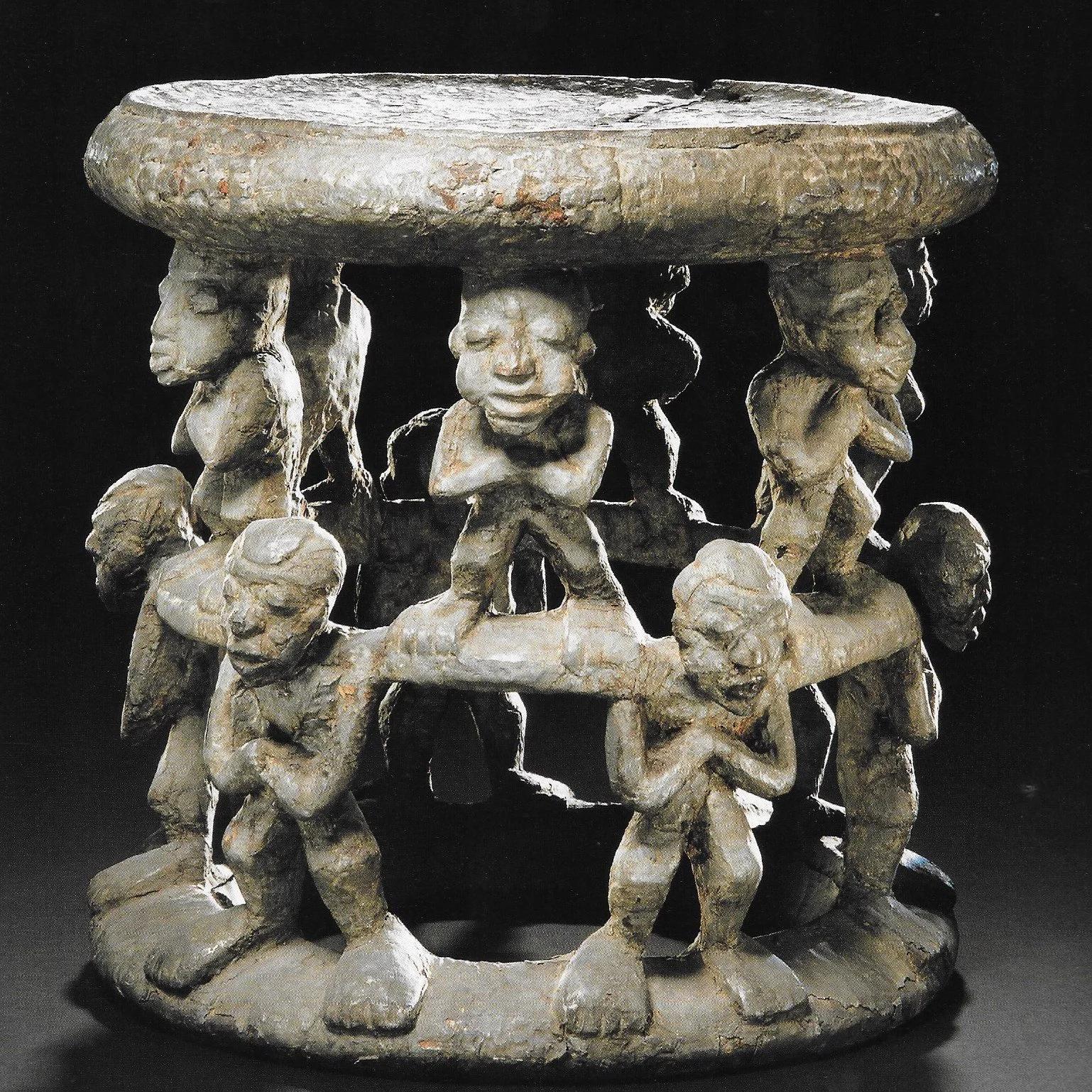
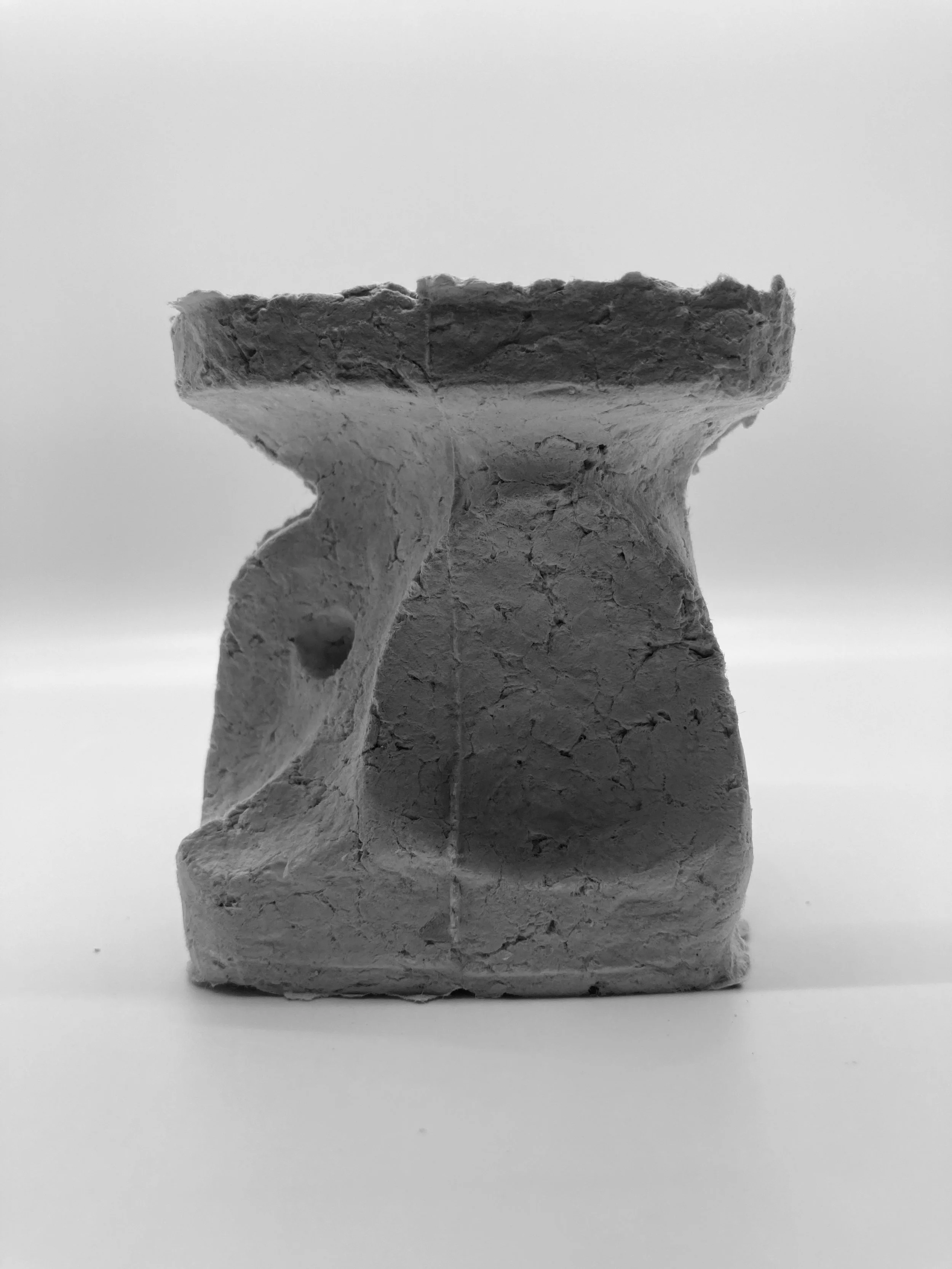
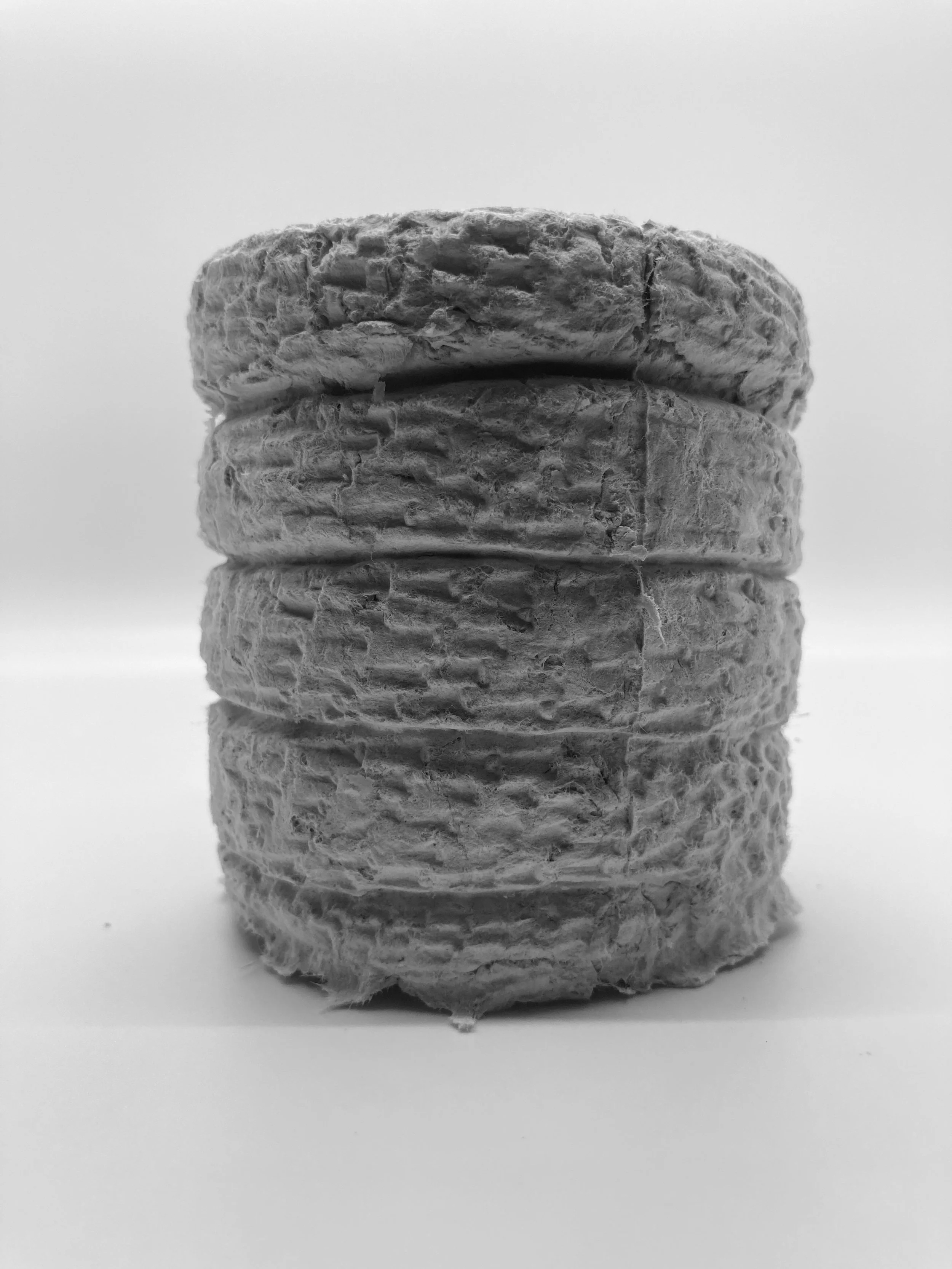
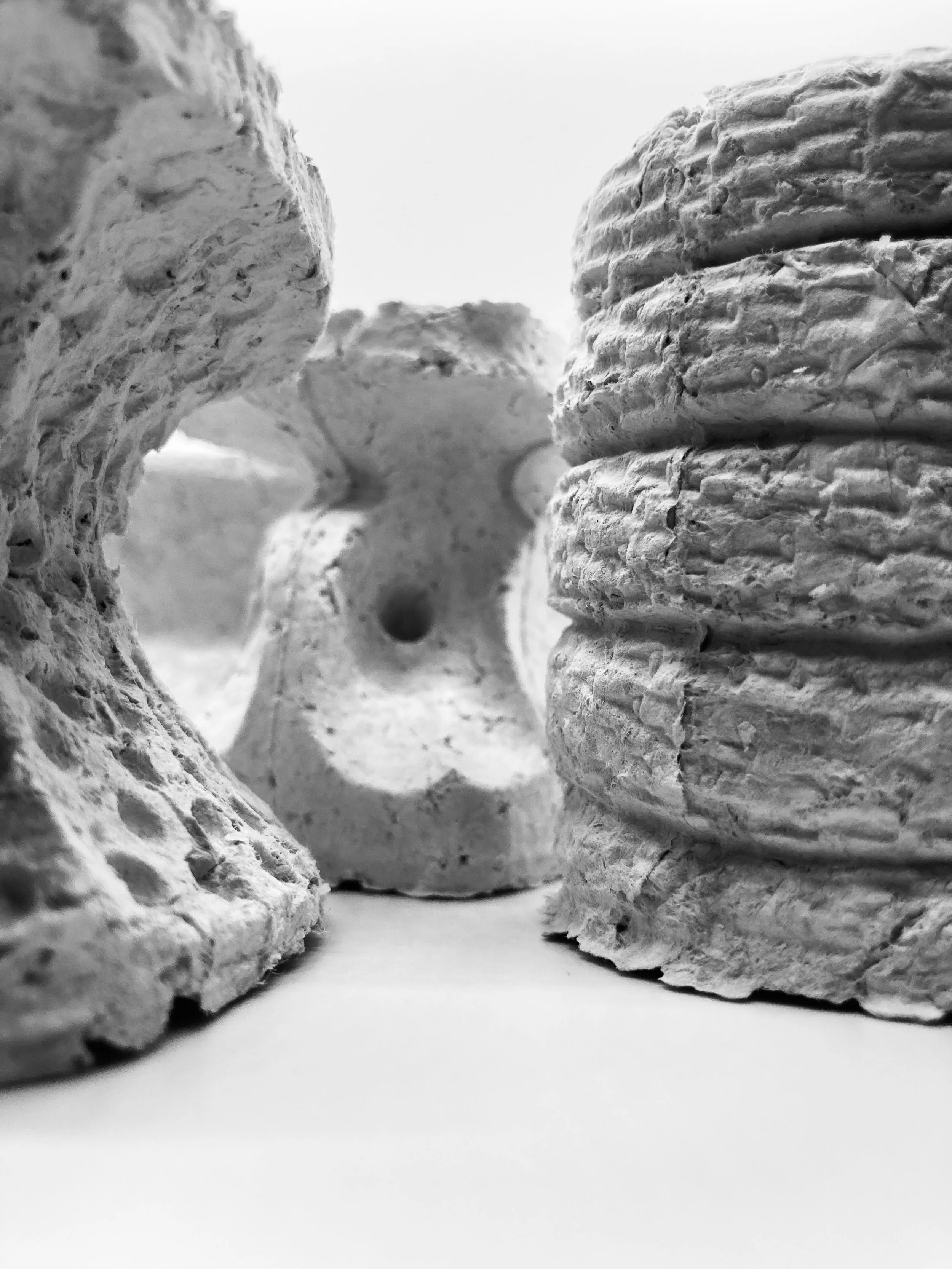
Maxime Mballa-Tagny, Stools, Wood Pulp, 2022.
Aim
Apply the attributes of Western Cameroonian (Grassland) artefacts to design.
Relevance
Grassland artefacts are historical documents of materials, forms and functions. The oral tradition is often lost as the items are passed from hand to hand, however, present day technology provides the ability to represent an item's evolving context. To preserve these cultures it is important for these traditions to evolve and gain relevance in a modern context by introducing it to a new generation of designers.
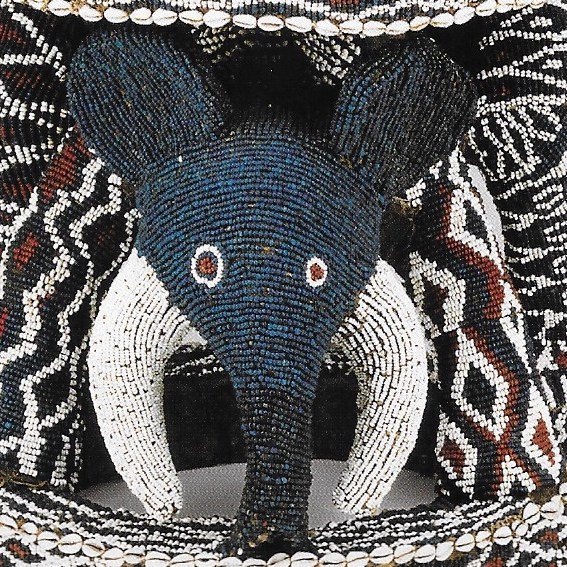
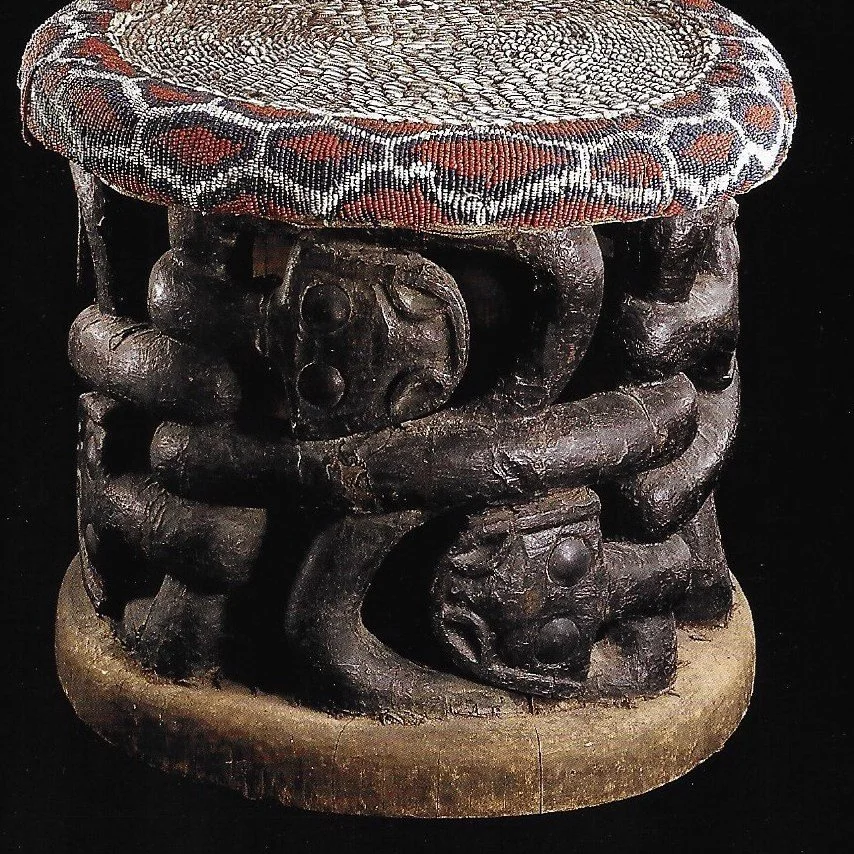
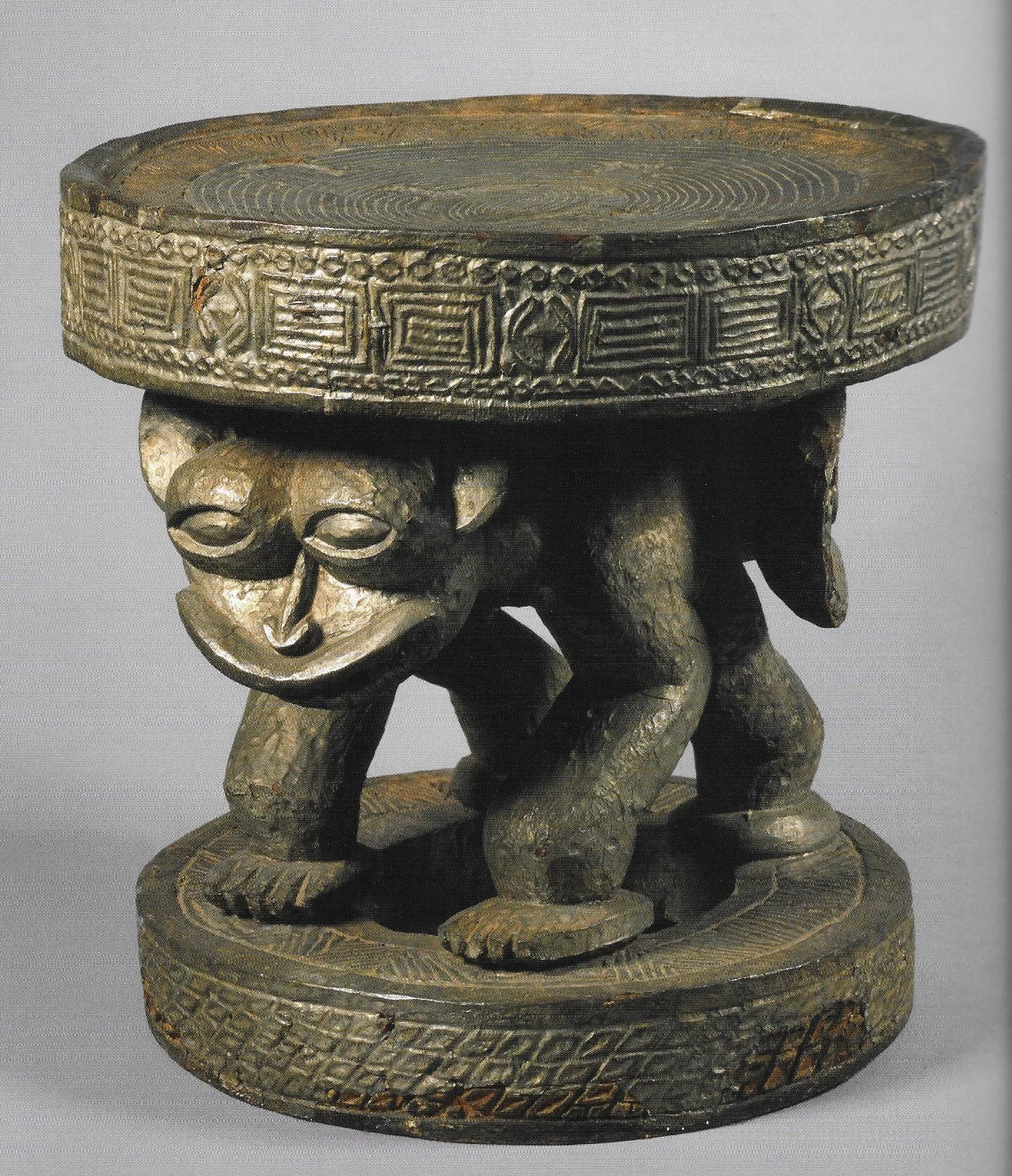
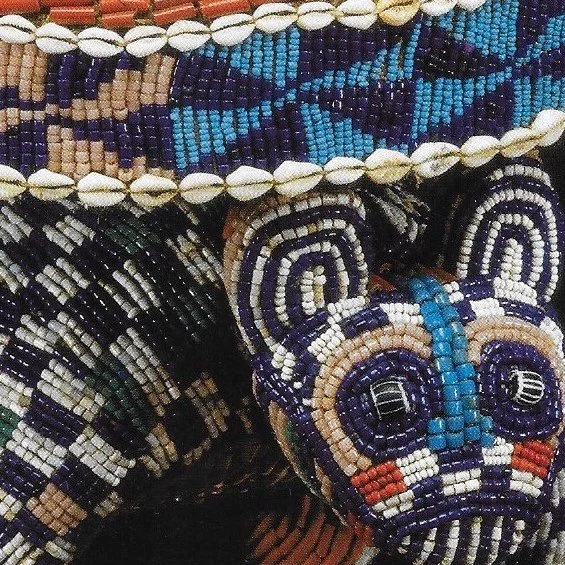
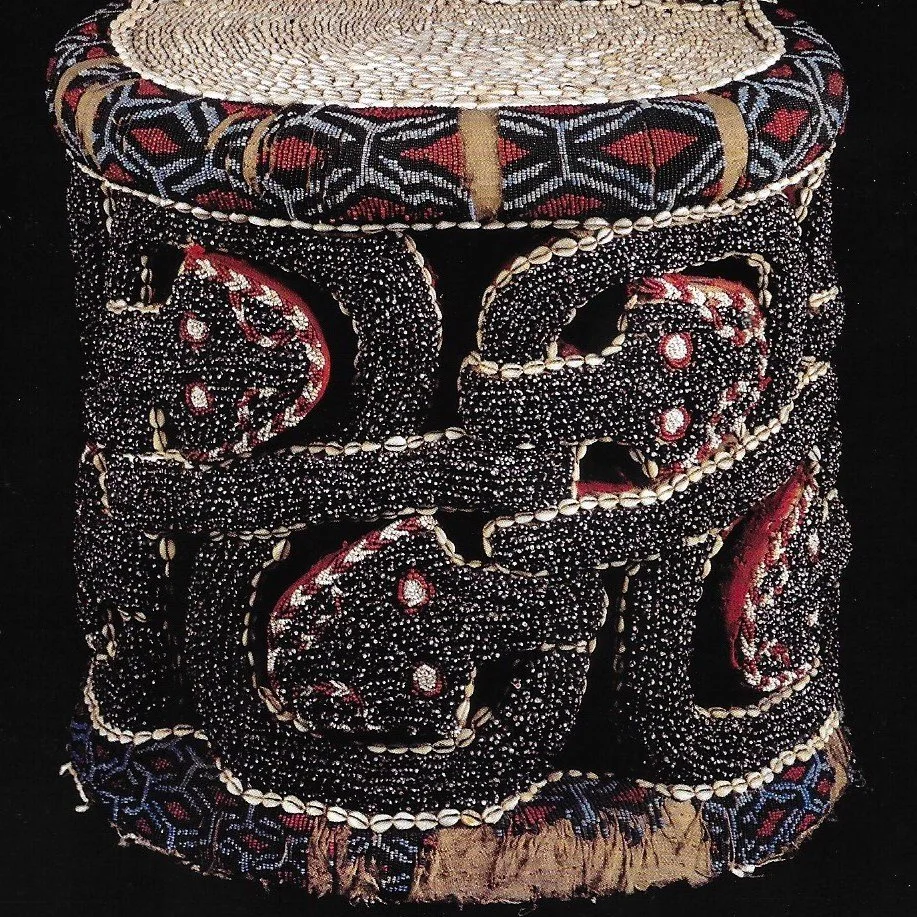
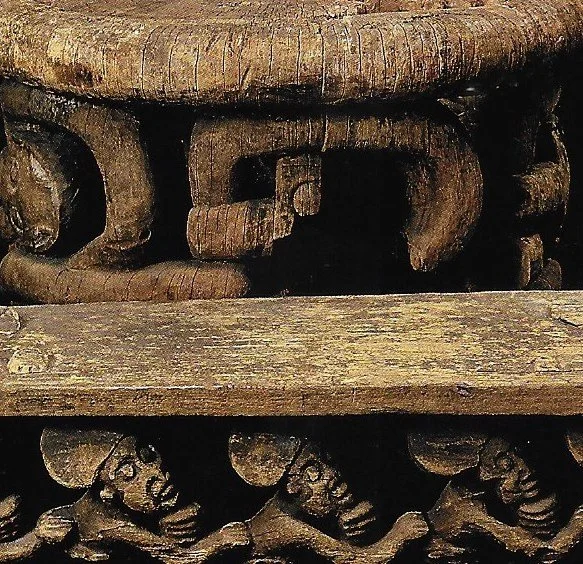
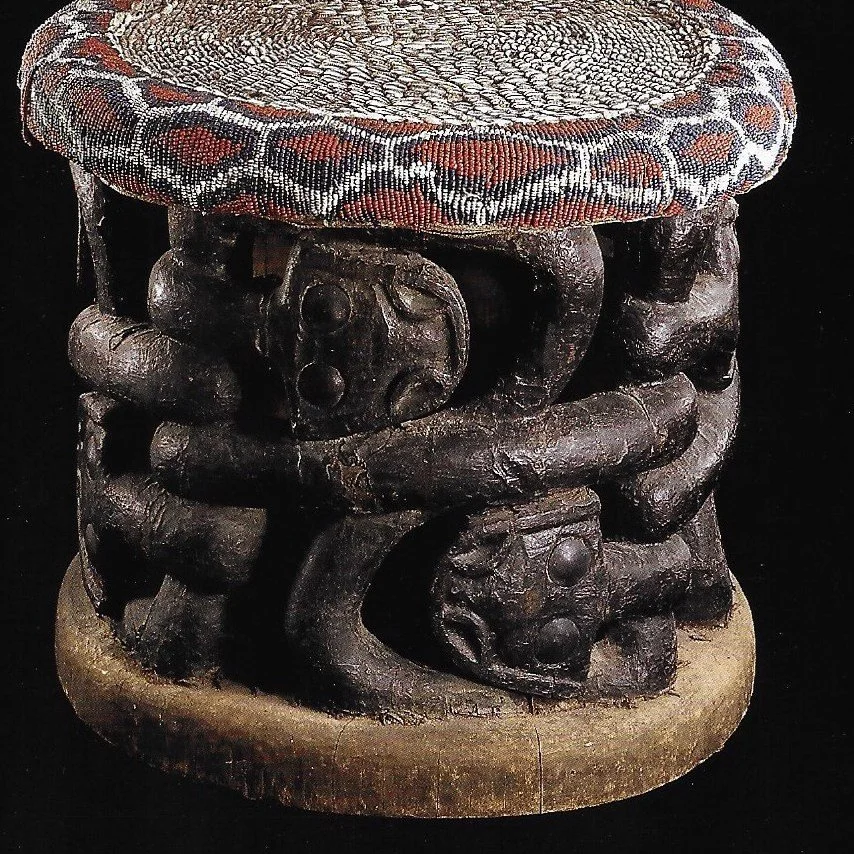
Materials such as beads, wood, and raffia, open insights regarding climate, tools, and trade. The forms - spiders, turtles, crocodiles and more - allude to the fauna and their role. Finally these symbols are abstracted into shapes (such as the spider into an "X") that become functional elements such as legs, joints and braces.
The indigenous knowledge is the wealth of ideas present on Grassland artefacts. Furniture operates as a "science" of these materials, forms and functions.
Context
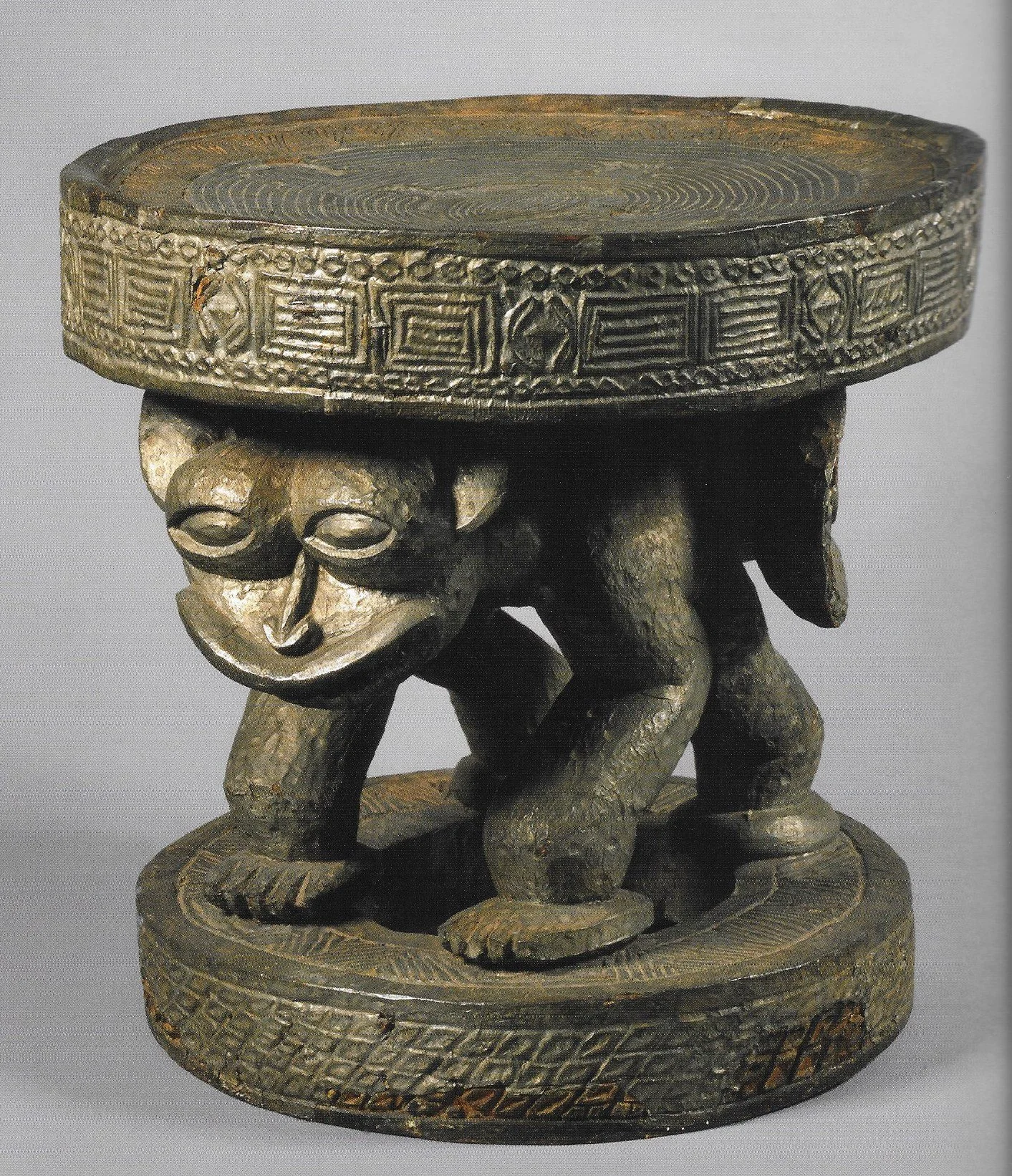
The restitution of Grassland artefacts in the 21st century is an opportunity. Following the disruptions of the 19th and 20th centuries, many works are in foreign countries, languages and narratives such as the Ethnologisches Museum of Berlin. In parallel Grassland cultures, such as the Batufam, are keen to connect their history with those willing to learn.
Methods
The project consists of three phases:
Statistics: Cataloguing the construction materials, symbols and cultures of Grassland artefacts using resources such as the Humboldt database “Kamerun Grassland” region.
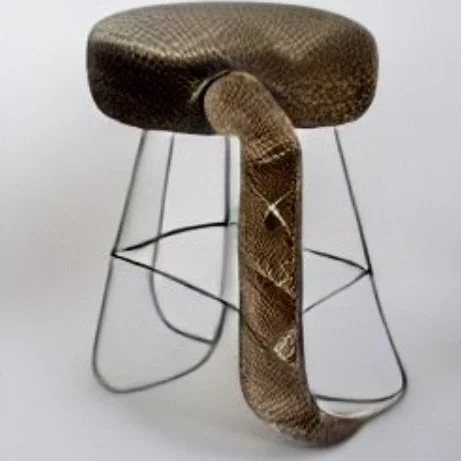
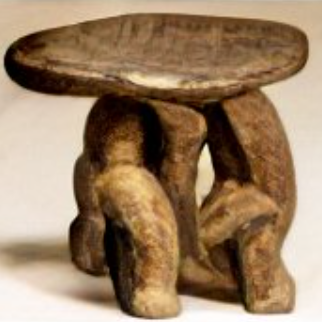
Renders: Rendering the results of the catalog using DALL-E mini, an AI model that can draw images from any text prompt.
Prototypes: Prototyping furniture designs using images from the catalog and renders from the AI model.
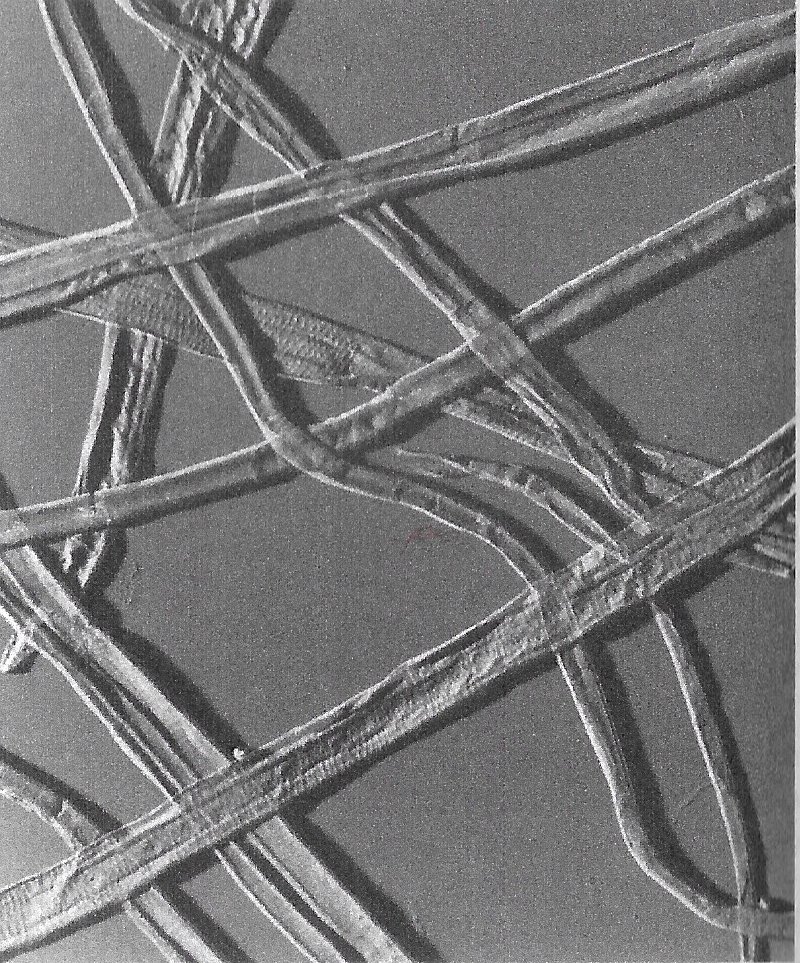
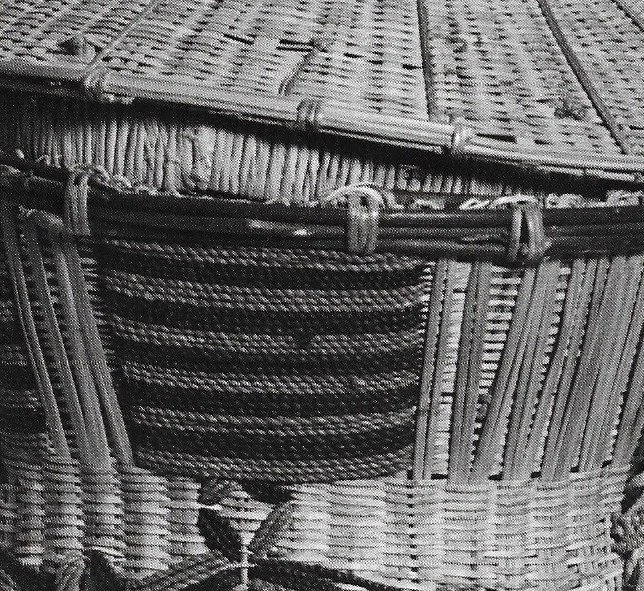
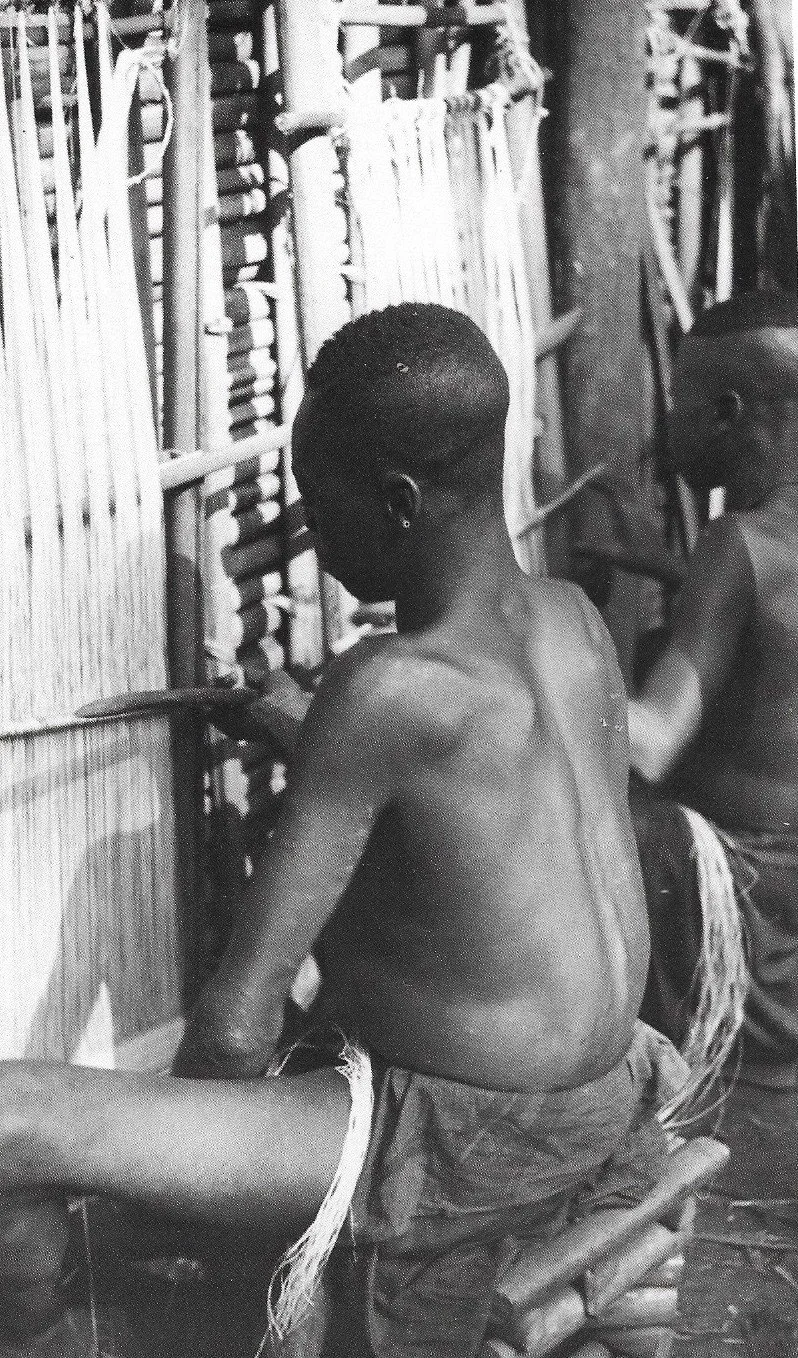
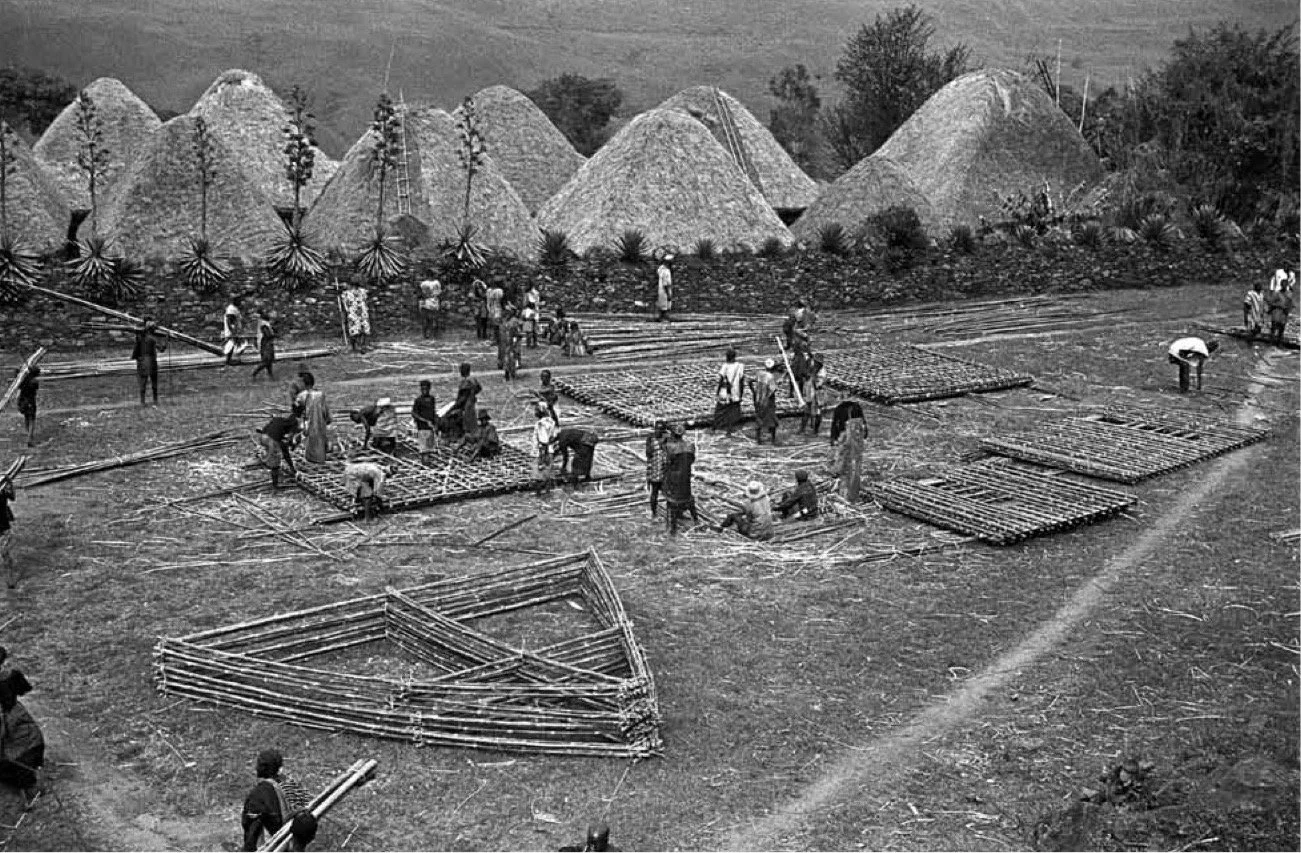
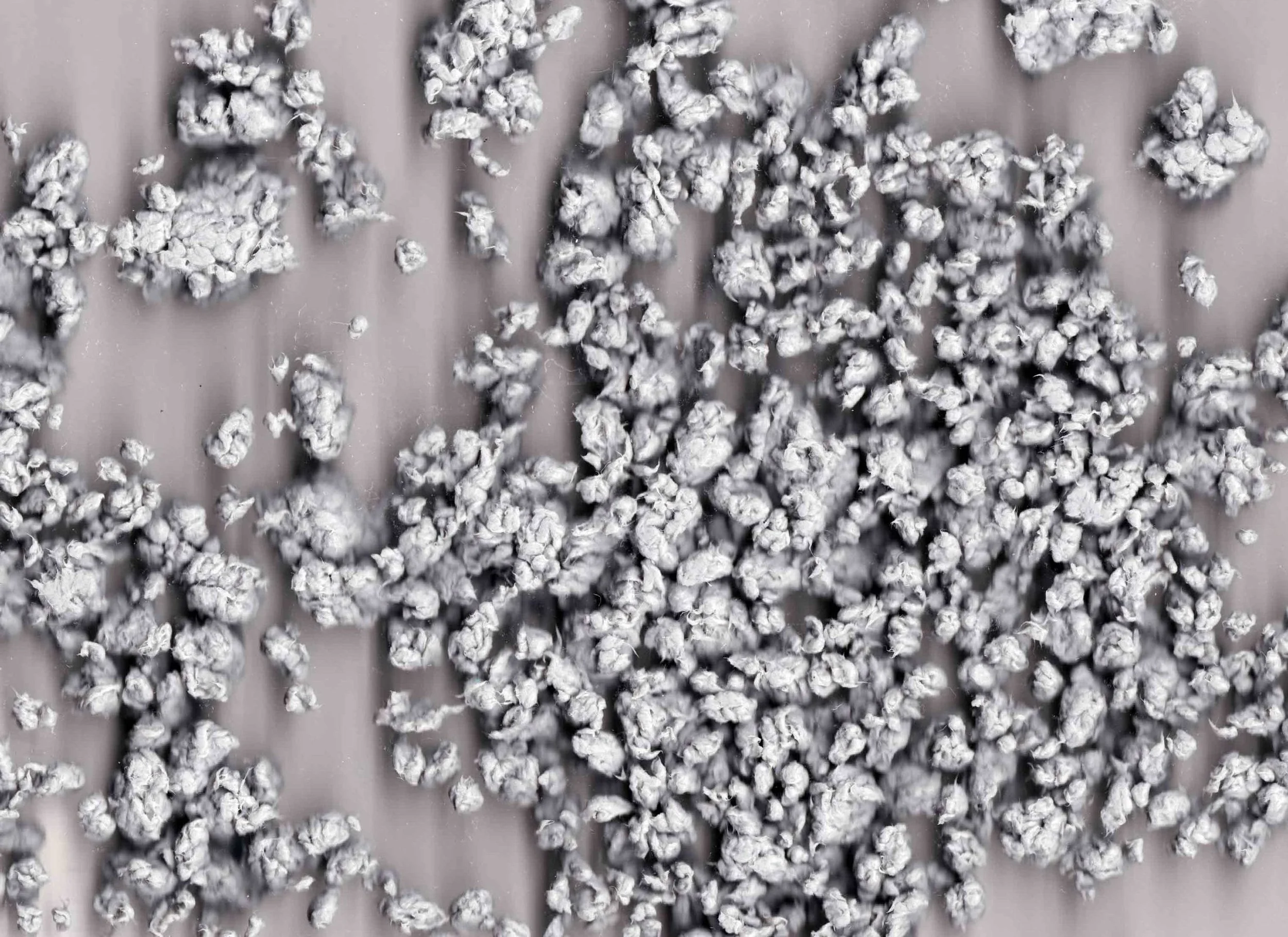
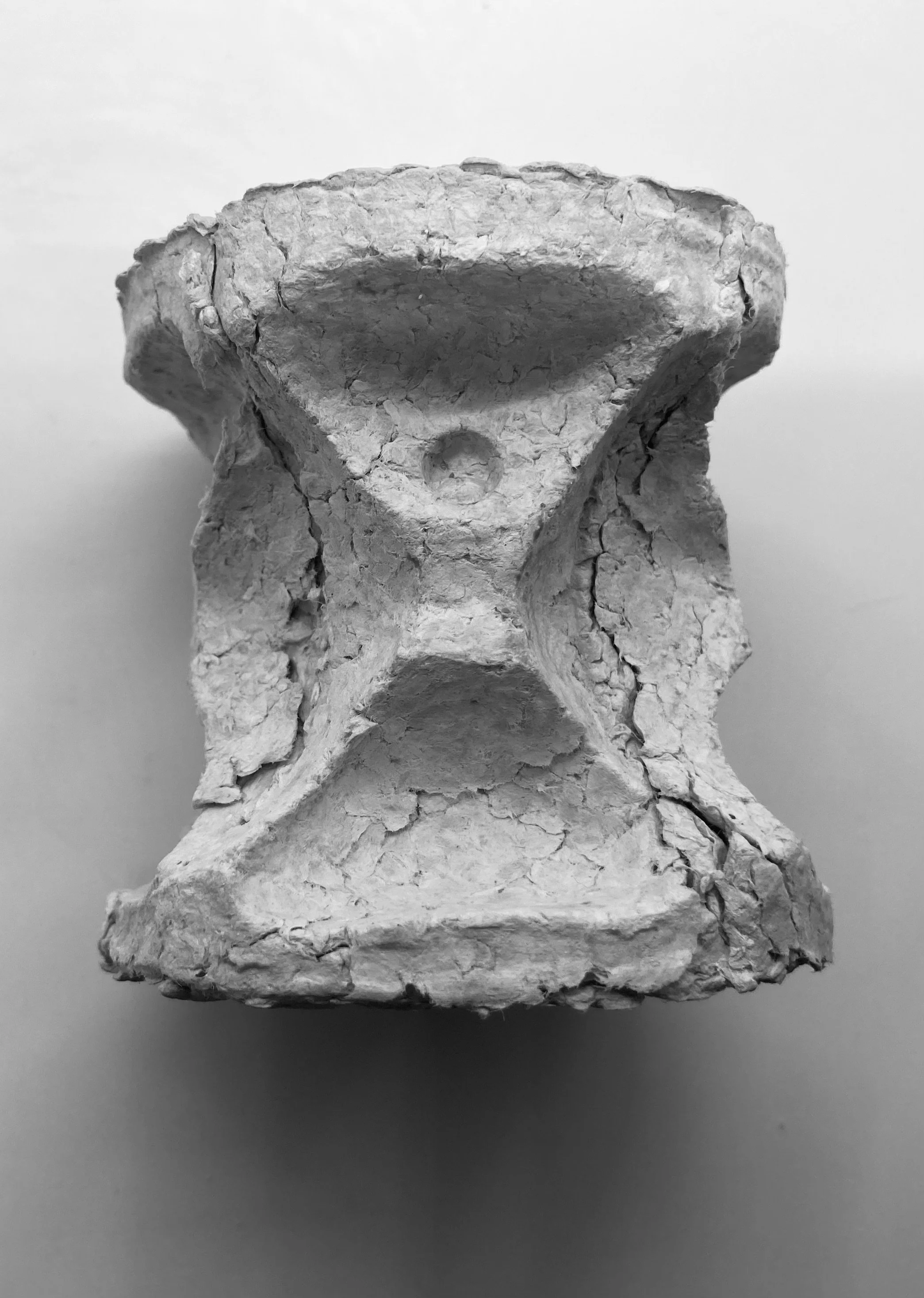
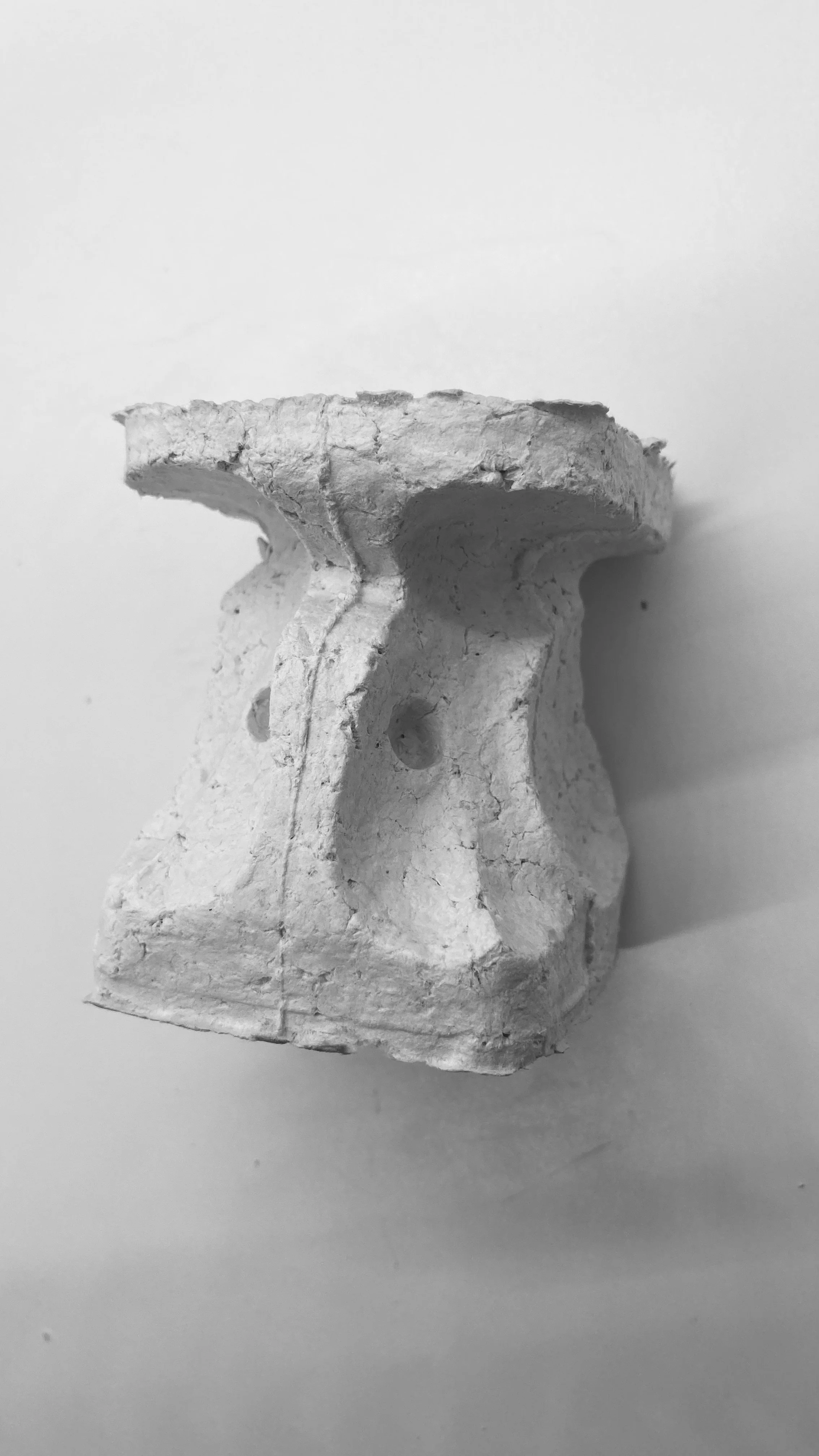
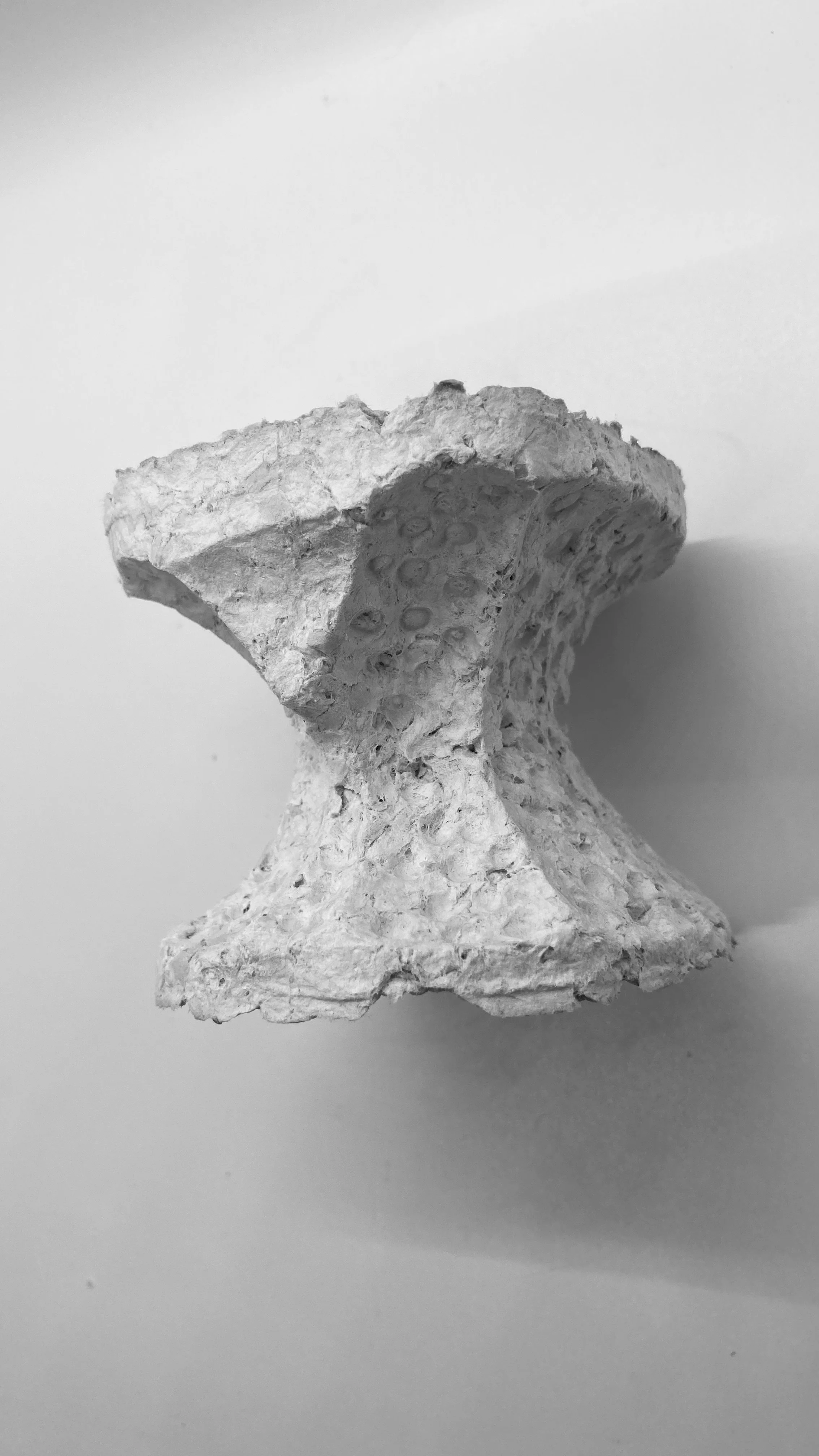
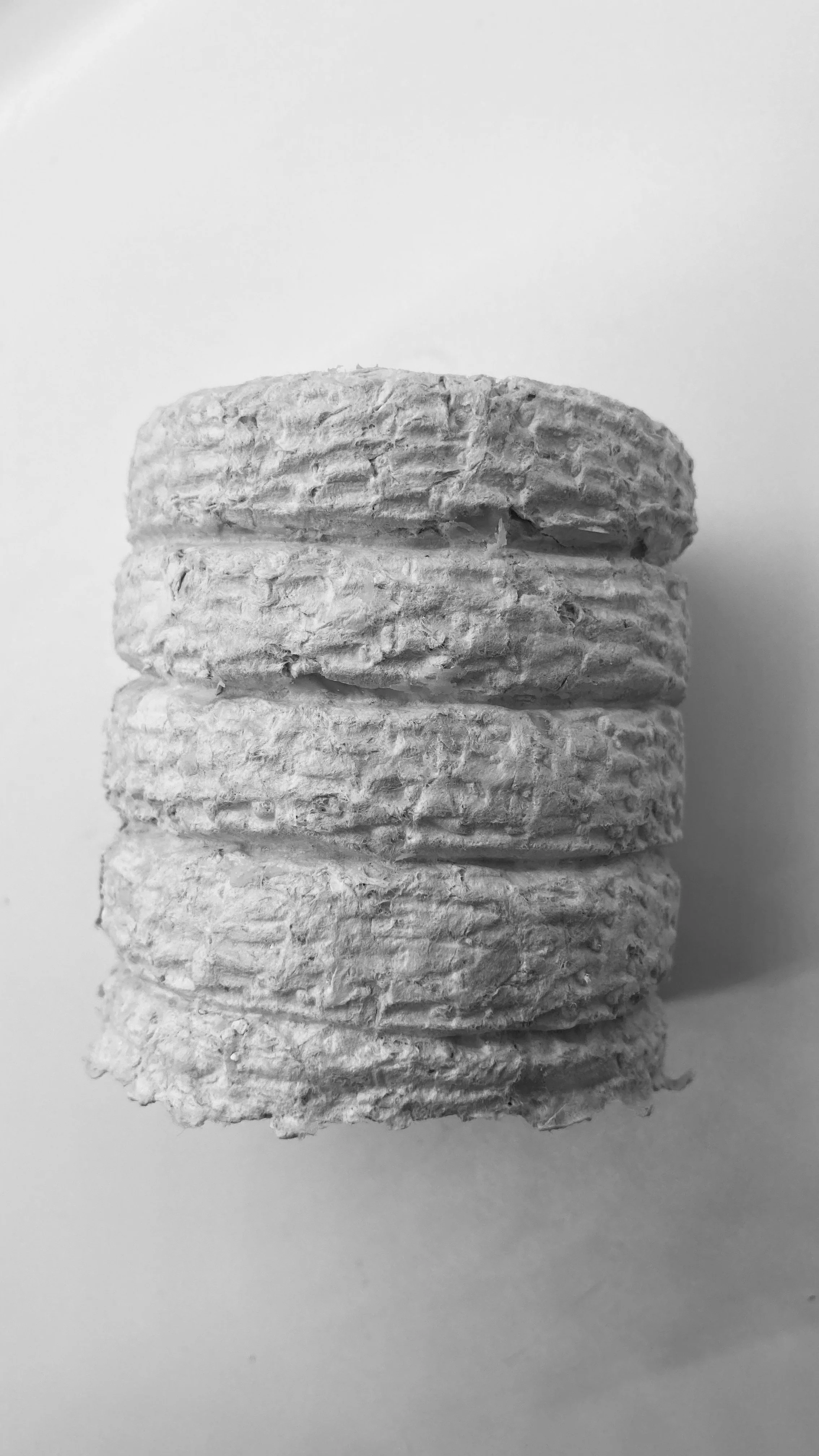
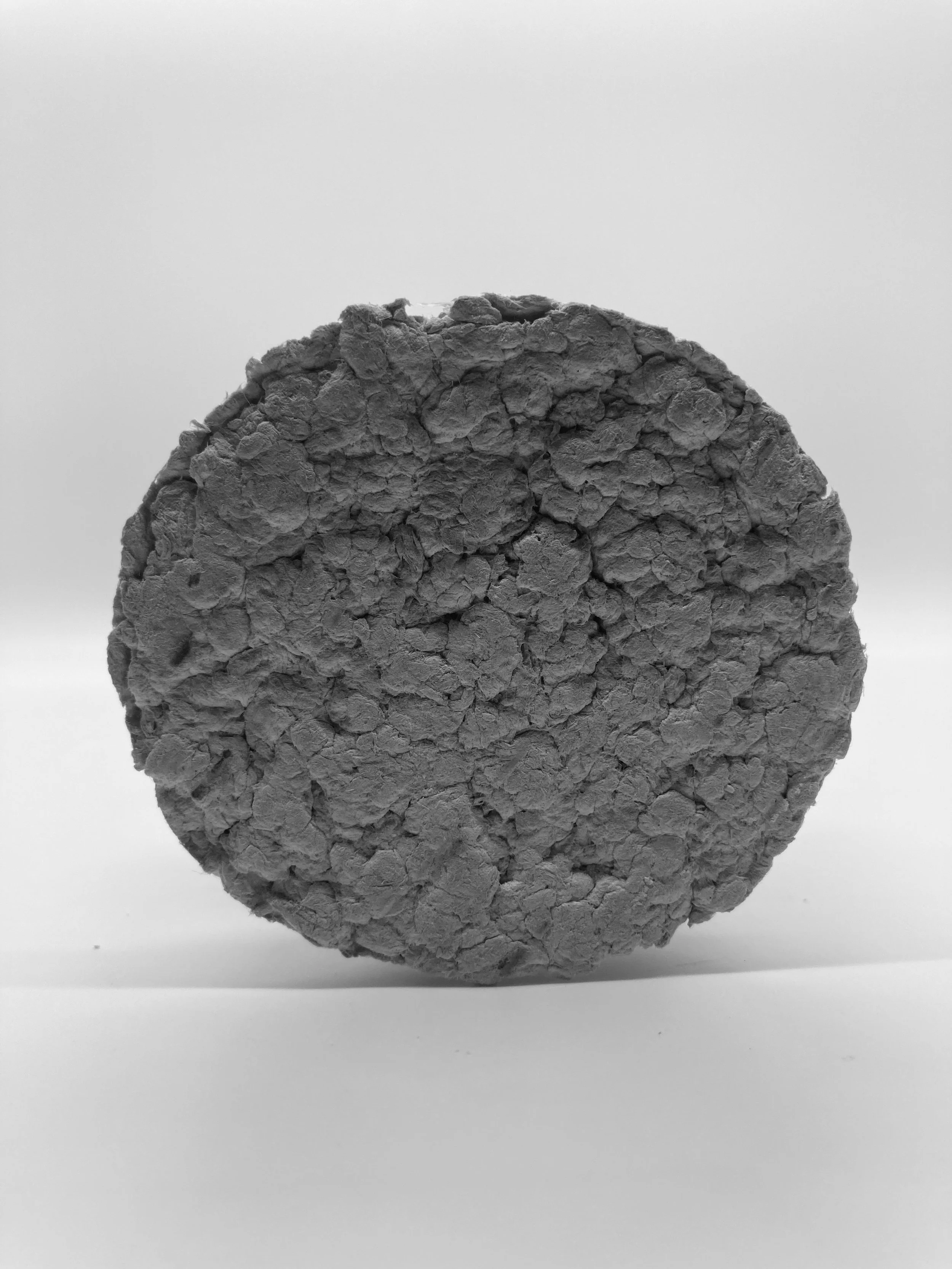
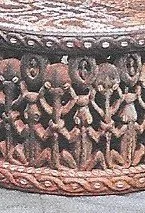
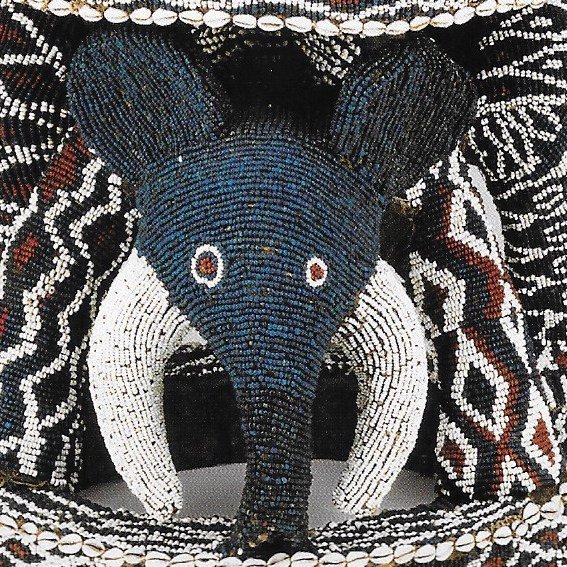
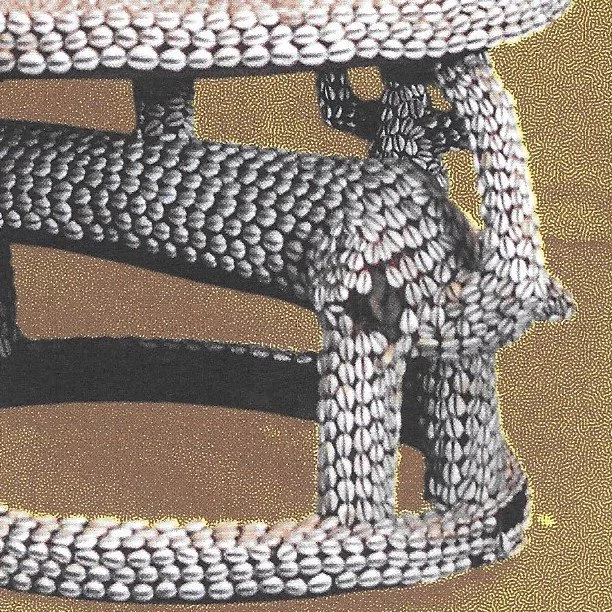
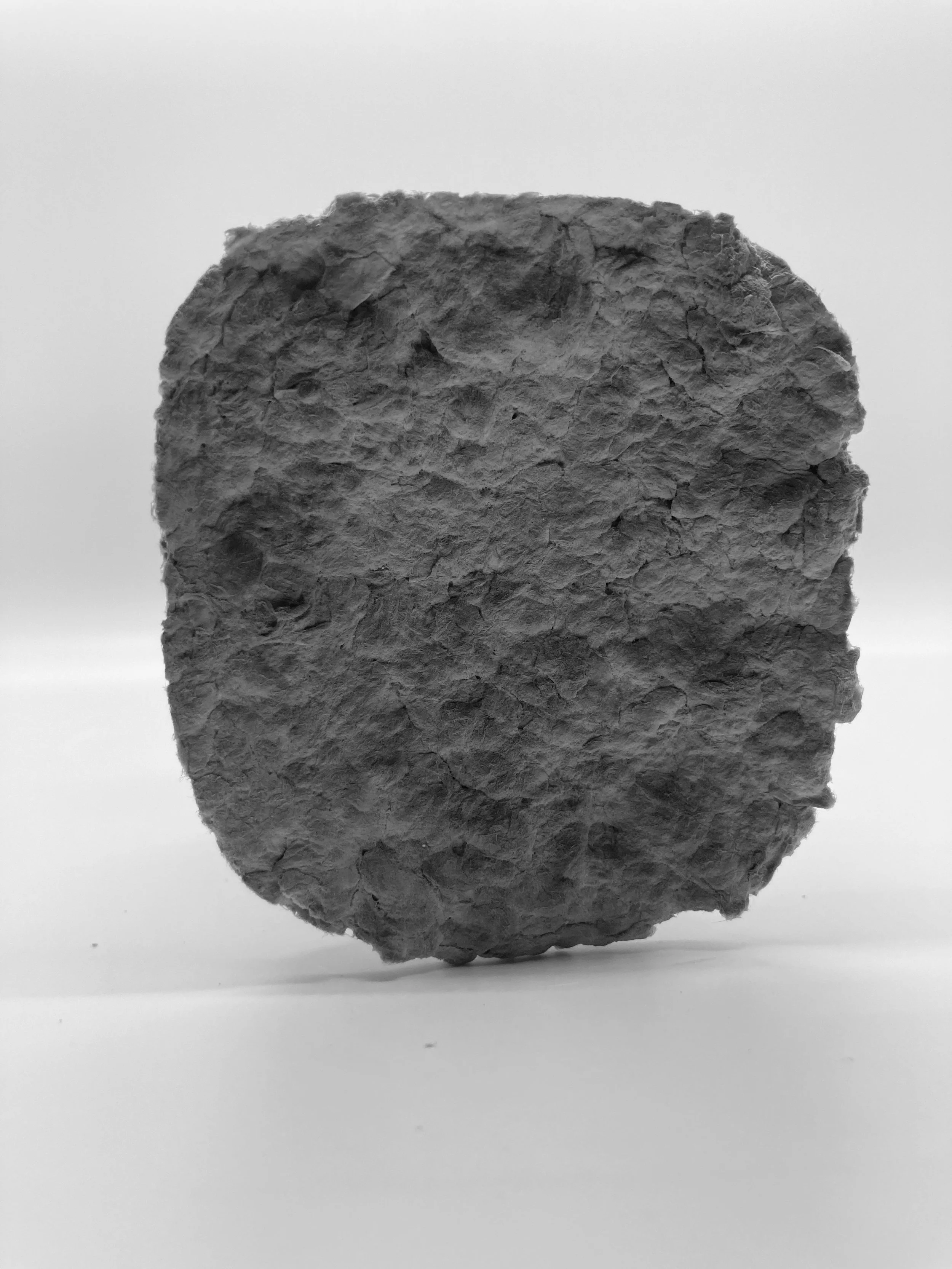
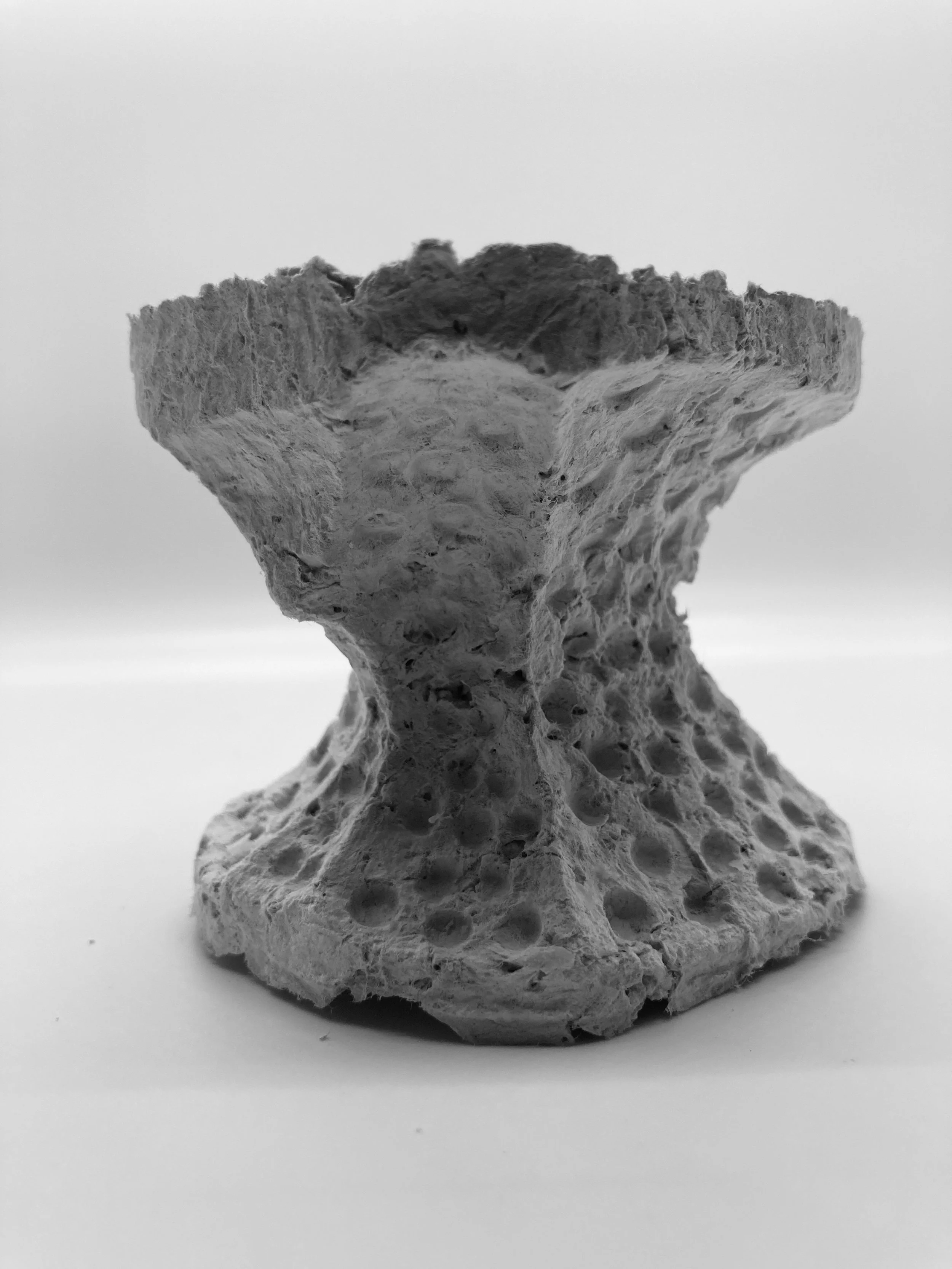
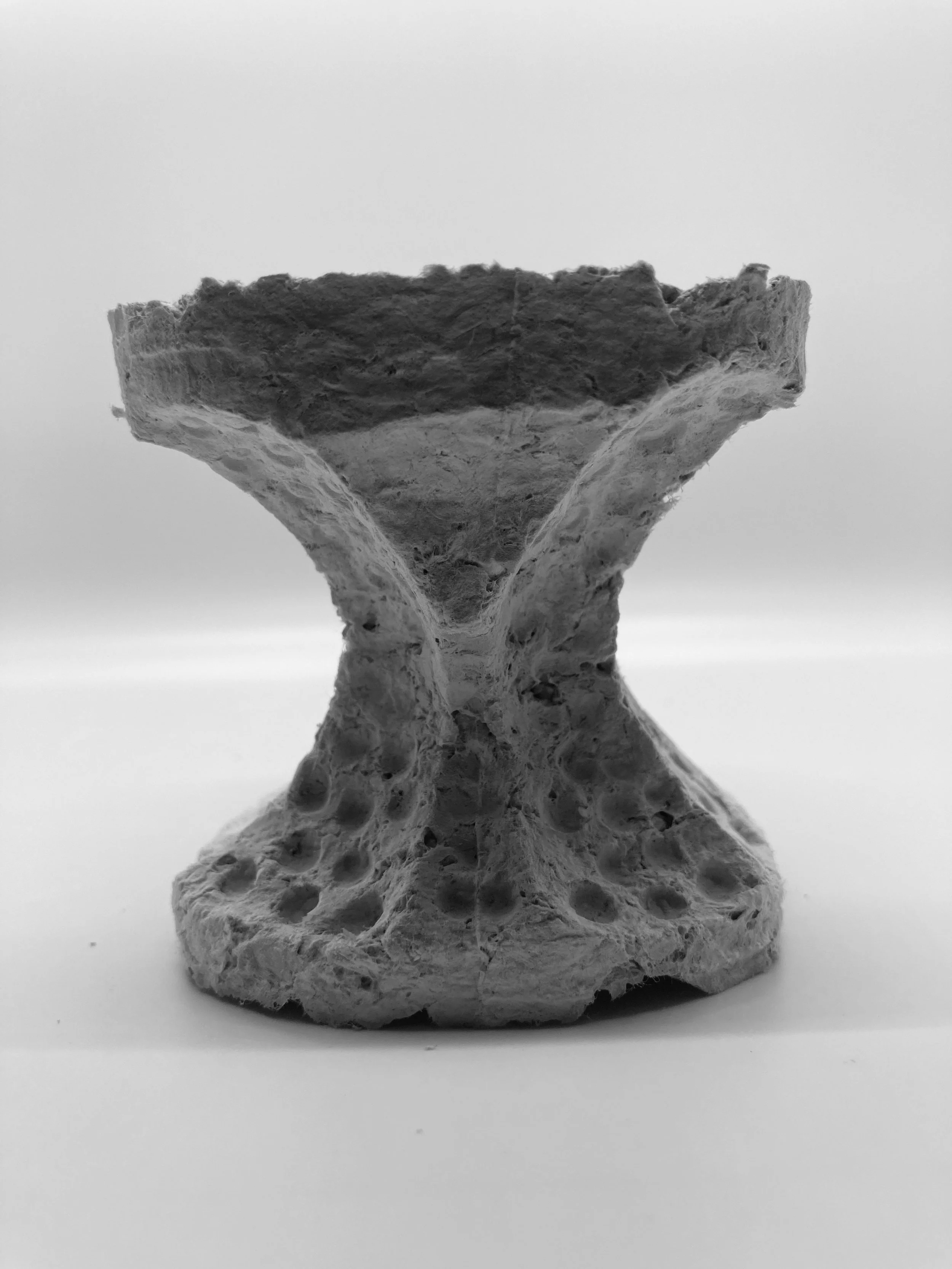
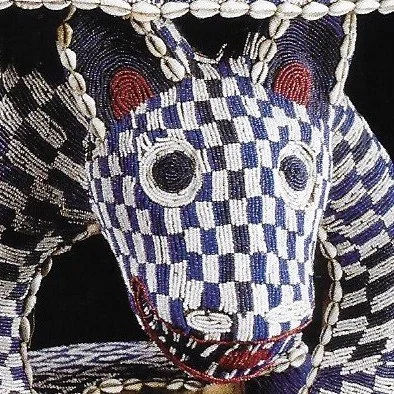
The material of choice for prototyping is wood pulp, a fibrous raw material. Wood pulp is the product of hydrogen bonds between cellulose fibers, the tapestry this creates can be observed under the microscope as seen in figure 1. Weaving finds uses across different scales in the Grasslands, including basketry (figure 2), textiles (figure 3) and architecture (figure 4).
Results
1. Statistics
2. Renders
3. Prototypes
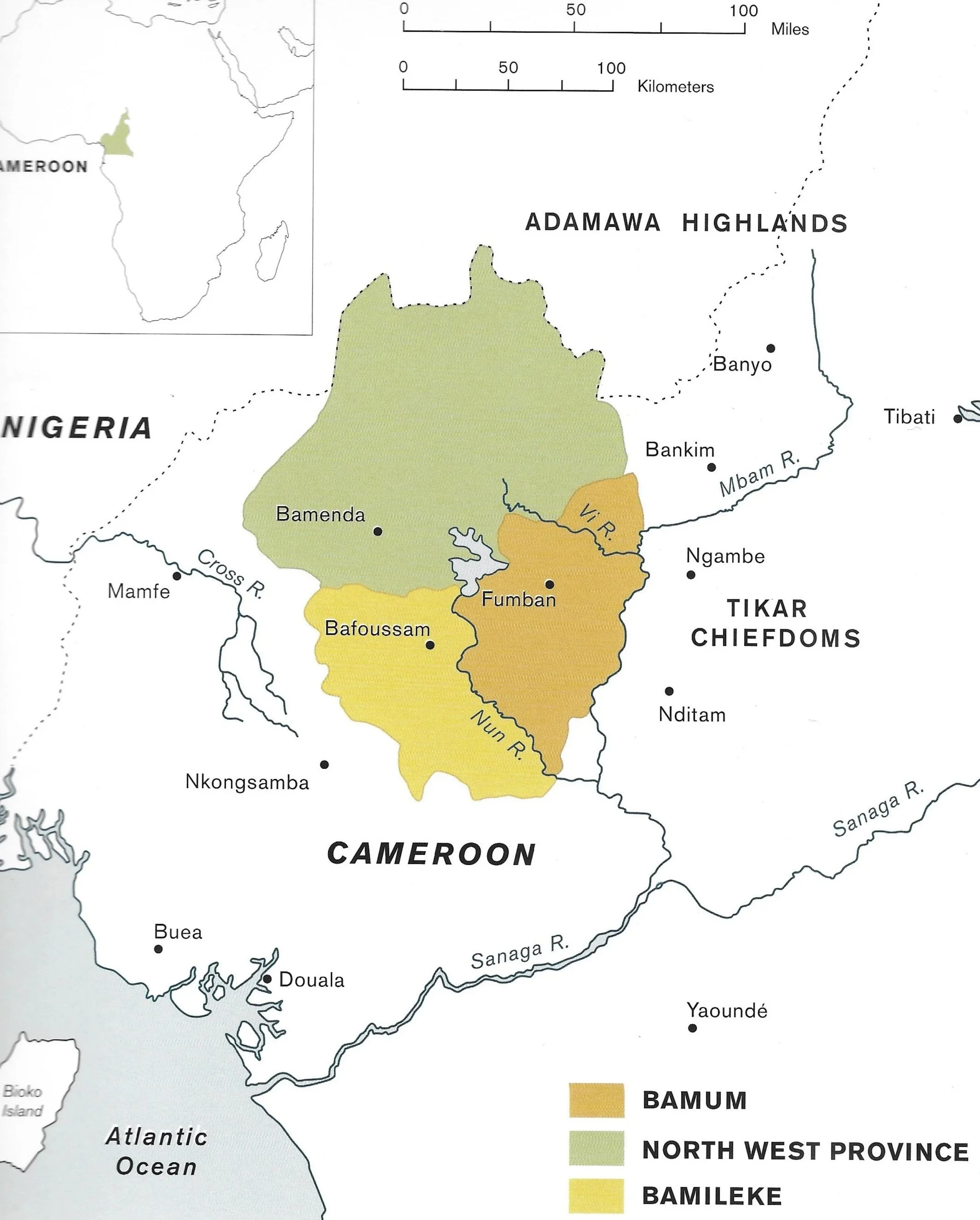
Map of Western Cameroon showing the three regional divisions, Bamum, North West Province, and the “Bamiléké” Grassfields.
1. Statistics
The Statistics phase involved cataloguing the furniture found in the following books:
Clarke, Christa, and Rebecca Arkenberg. The Art of Africa: A Resource for Educators
Geary, Christraud M., and Pierre Saint-Jean. Bamum
Geary, Christraud, and Lorenz Homberger. Cameroon: Art of the Kings
Gebauer, Paul. Art of Cameroon
LaGamma, Alisa. Genesis: Ideas of Origin in African Sculpture
LaGamma, Alisa. Heroic Africans: Legendary Leaders, Iconic Sculptures
Tishman, Ruth, Paul Tishman, and Susan Vogel. For Spirits and Kings: African Art from the Paul and Ruth Tishman Collection
Webb, Virginia-Lee. Perfect Documents Walker Evans and African Art, 1935
Beumers, Erna, and Hans-Joachim Koloss. Kings of Africa: Art and Authority in Central Africa
The following section provides a tally of three elements:
Region
Symbols
Materials
The Western Grassland regions include the Grassfield, Northwest, and Bamum; they account for 67 artefacts in the catalog:
| Region | Count |
|---|---|
| Grassfield | 28 |
| Northwest | 20 |
| Bamum | 19 |
| Unknown | 2 |
| Littoral | 1 |
The three regions - Grassfield, Northwest and Bamum - distinguish themselves stylistically and historically. As a result, symbols and materials were sorted by region. Below are the results for symbols:
| Symbol | Total | Region | ||
|---|---|---|---|---|
| Grassfield | Northwest | Bamum | ||
| People | 41 | 18 | 11 | 12 |
| Leopard | 14 | 8 | 4 | 1 |
| Python | 11 | 0 | 0 | 11 |
| Elephant | 8 | 4 | 4 | 0 |
| Lion | 7 | 5 | 2 | 0 |
| Buffalo | 5 | 1 | 4 | 0 |
| Snake | 4 | 1 | 3 | 0 |
| Crocodile | 3 | 0 | 1 | 1 |
| Spider | 3 | 2 | 1 | 0 |
| Bats | 2 | 0 | 2 | 0 |
| Bird | 2 | 1 | 0 | 0 |
| Lizard | 2 | 2 | 0 | 0 |
| Crow | 1 | 1 | 0 | 0 |
| Donkey [?] | 1 | 0 | 1 | 0 |
| Fish | 1 | 0 | 0 | 0 |
| Frog | 1 | 1 | 0 | 0 |
| Hare | 1 | 0 | 1 | 0 |
| Spear | 1 | 0 | 1 | 0 |
Below are the results for materials:
| Material | Total | Region | ||
|---|---|---|---|---|
| Grassfield | Northwest | Bamum | ||
| Wood | 69 | 28 | 19 | 19 |
| Cloth | 29 | 11 | 2 | 15 |
| Cowries | 26 | 9 | 1 | 15 |
| Beads | 24 | 6 | 2 | 15 |
| Copper | 8 | 1 | 3 | 4 |
| Horn | 3 | 3 | 0 | 0 |
| Tin | 3 | 0 | 3 | 0 |
| Bronze | 2 | 1 | 0 | 1 |
| Hair | 2 | 0 | 2 | 0 |
| Metal | 2 | 2 | 0 | 0 |
| Pigment | 2 | 0 | 0 | 2 |
| Charcoal | 1 | 0 | 1 | 0 |
| Coins | 1 | 1 | 0 | 0 |
| Feathers | 1 | 1 | 0 | 0 |
| Iron | 1 | 0 | 0 | 1 |
| Plant fiber | 1 | 1 | 0 | 0 |
| Polychrome | 1 | 0 | 1 | 0 |
| Rattan | 1 | 1 | 0 | 0 |
The results provide a useful overview of the regions; their statistics will be of use as text prompts for the A.I model, DALL-E mini. The table below is a summary of the results used in the next section, Renders. It shows the top two symbols and materials by region:
| Region | Symbol | Count | Material | Count |
|---|---|---|---|---|
| Grassfield | People | 18 | Wood | 28 |
| Leopard | 8 | Cloth | 11 | |
| Northwest | People | 11 | Wood | 19 |
| Elephant | 4 | Tin, Copper | 3 | |
| Bamum | People | 12 | Wood | 19 |
| Python | 11 | Cloth, Cowries, Beads | 15 |
2. Renders
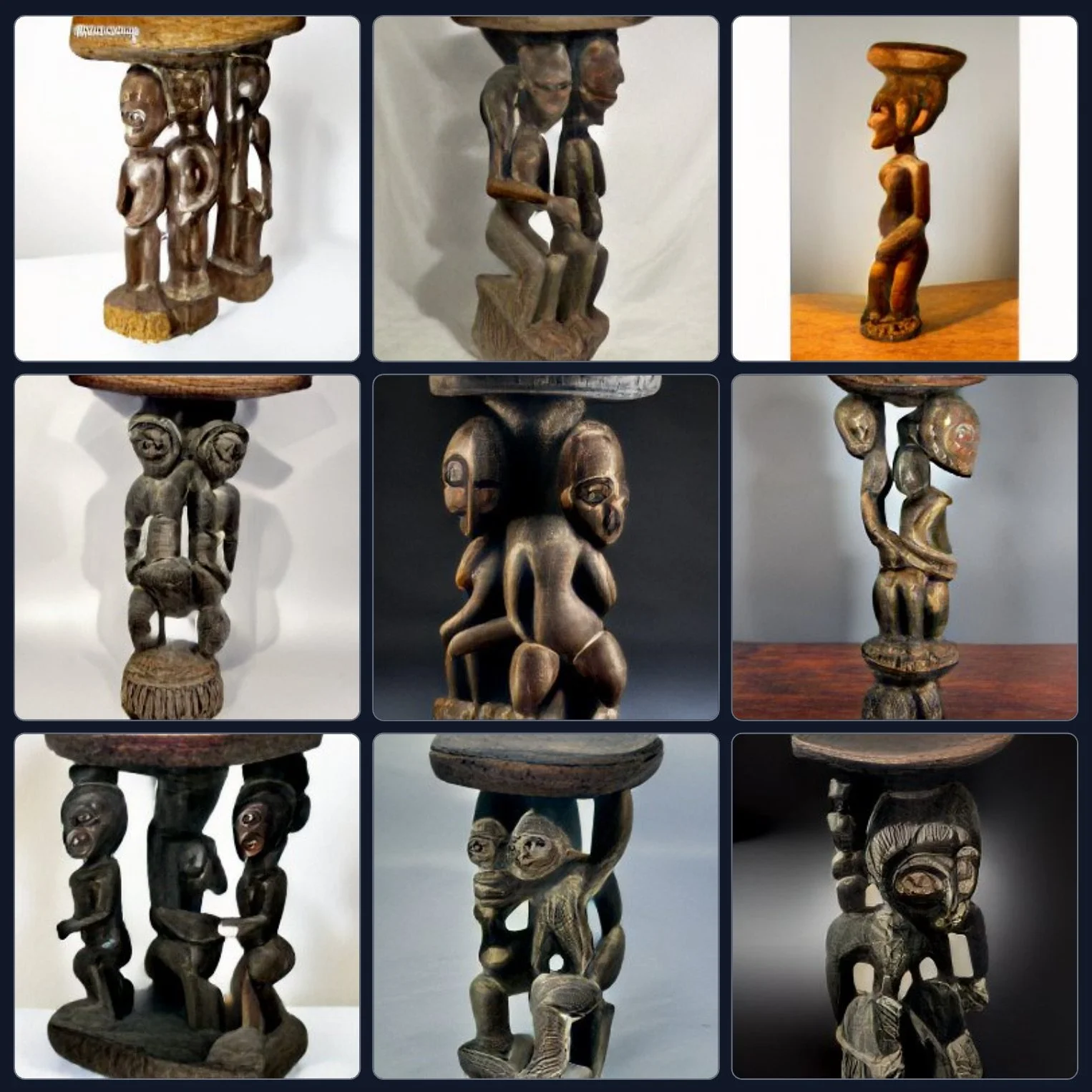
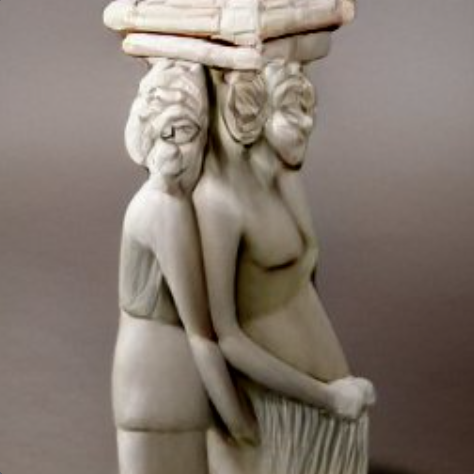
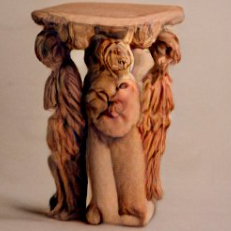
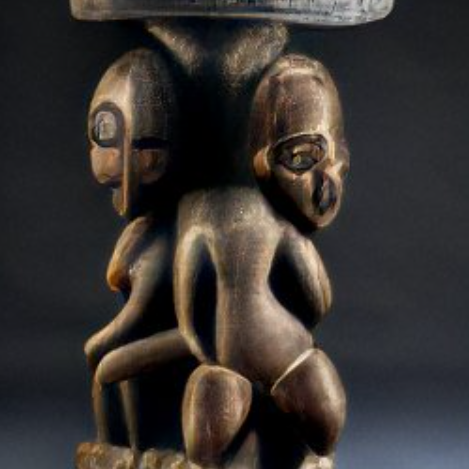
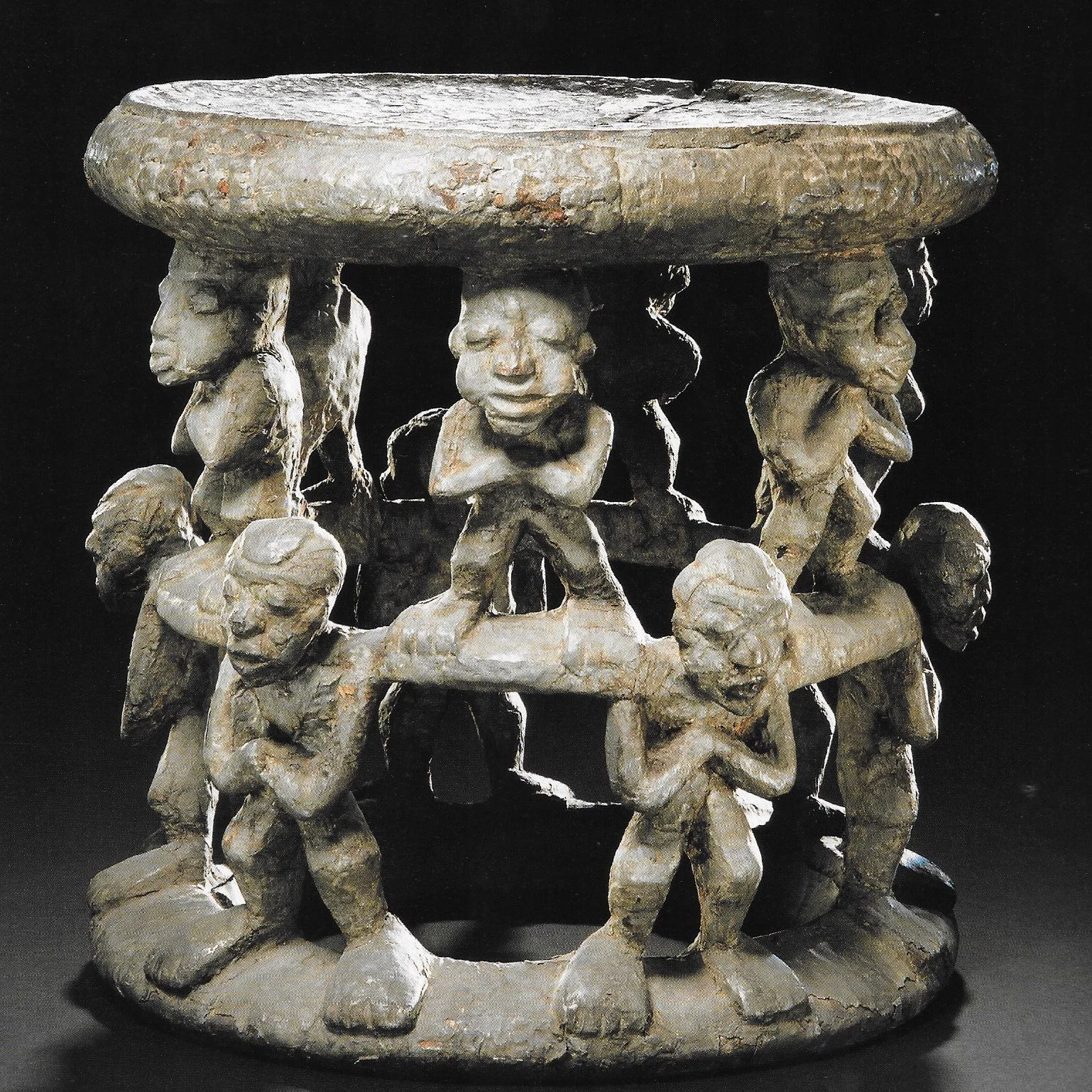
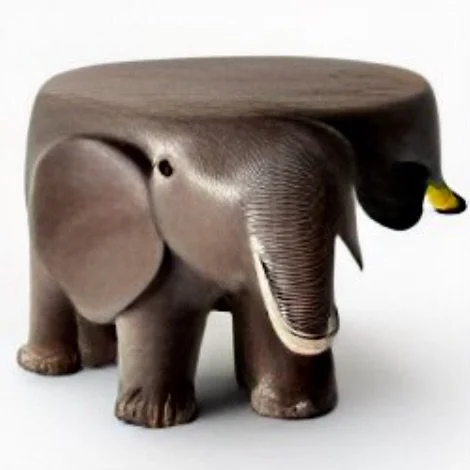
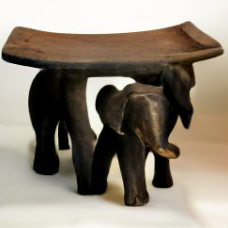
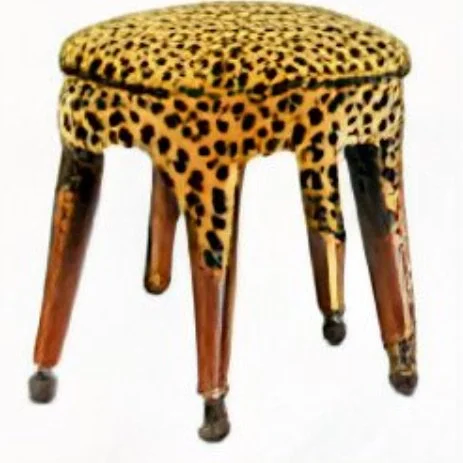
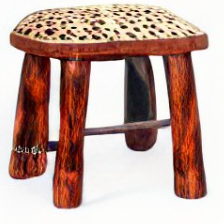
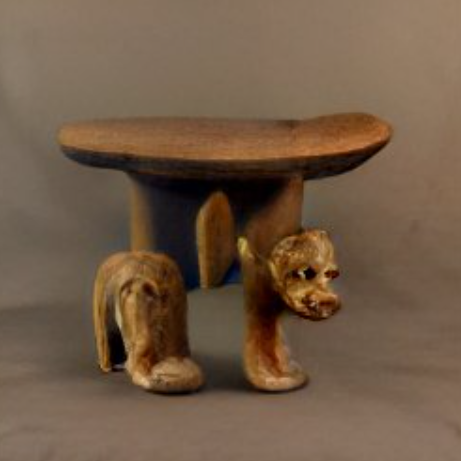
DALL-E mini is an AI model that can draw images from any text prompt. The results from the Statistics phase - symbols, materials and region - inform the text prompts. The initial prompt was, [Symbol] Stool:
Caryatid* Stool
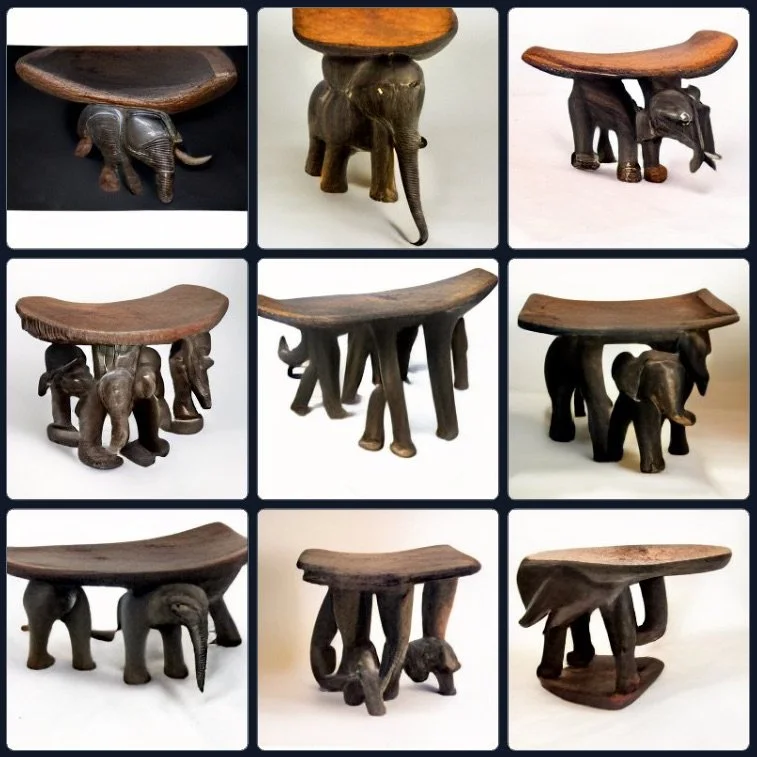
Elephant Stool
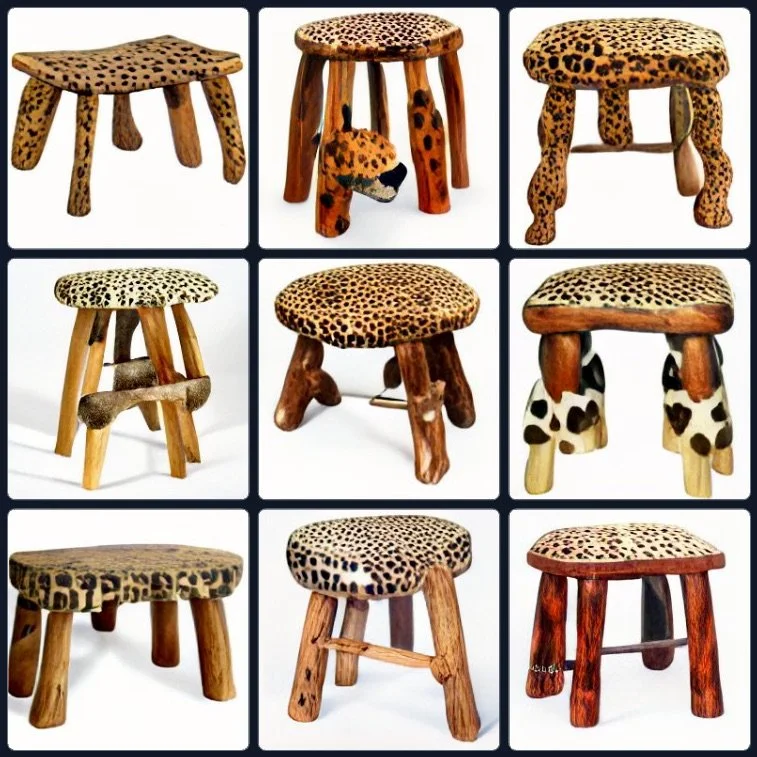
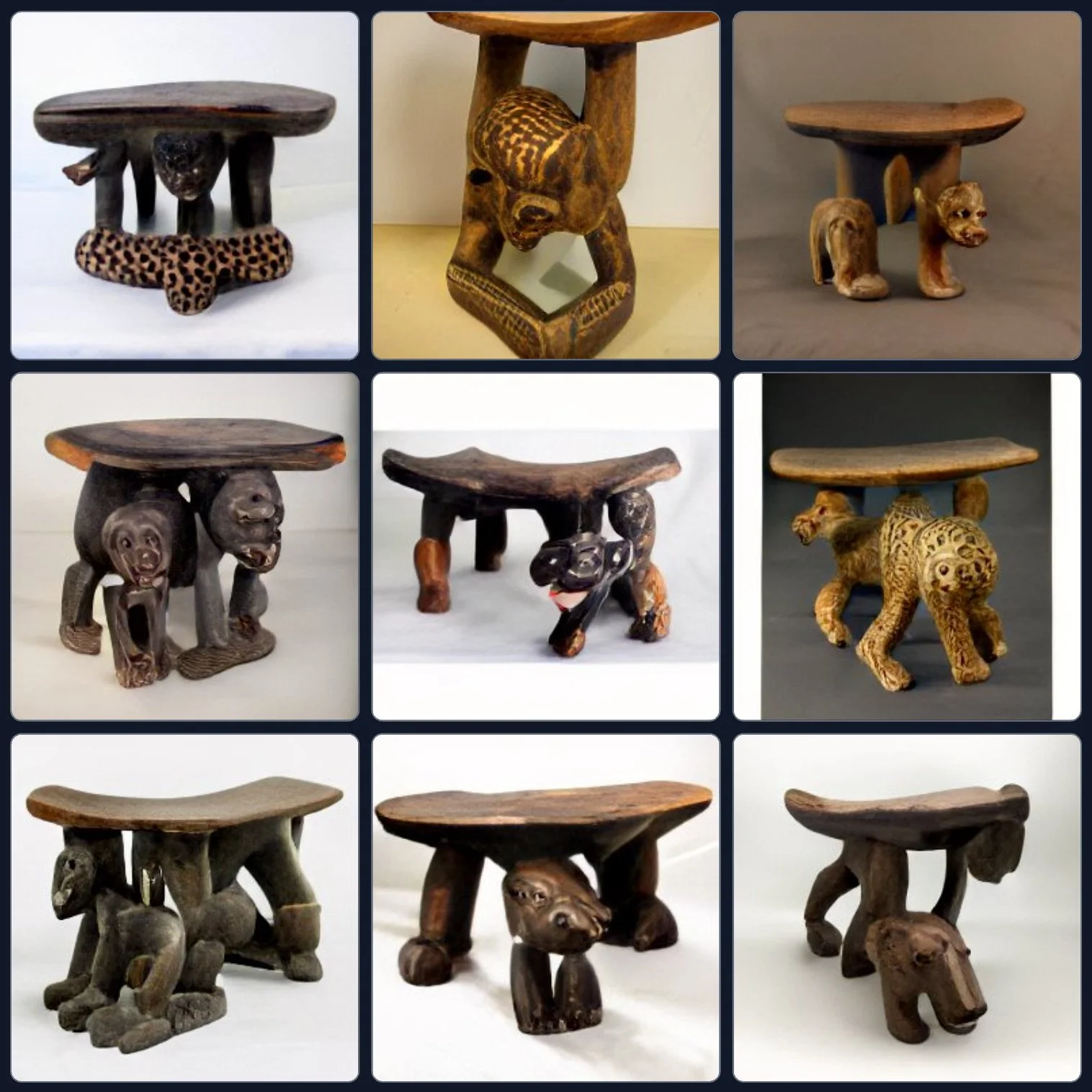
Leopard Stool
Python Stool
*Caryatid, synonymous for “people”, is a word used to describe ornamental human figures.
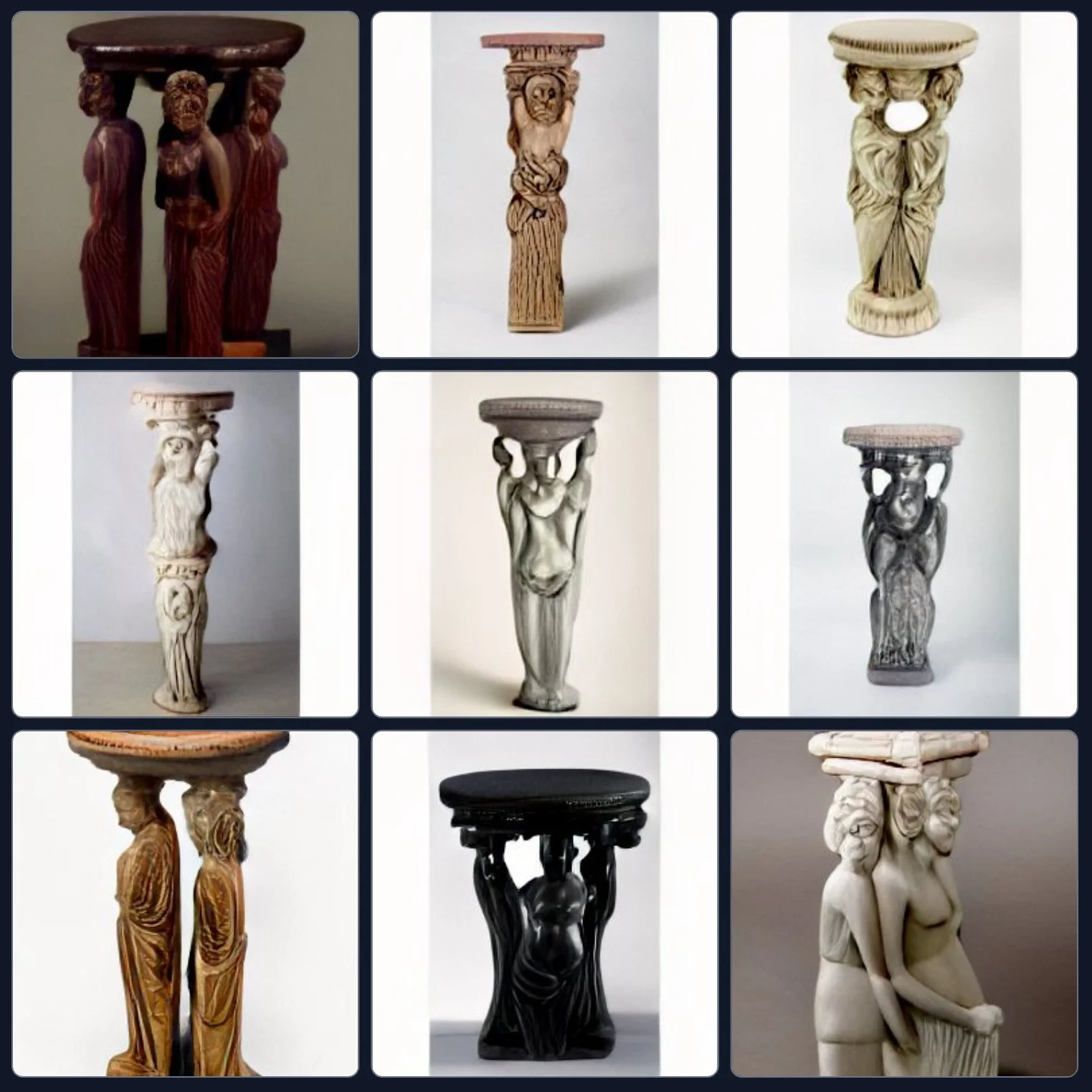
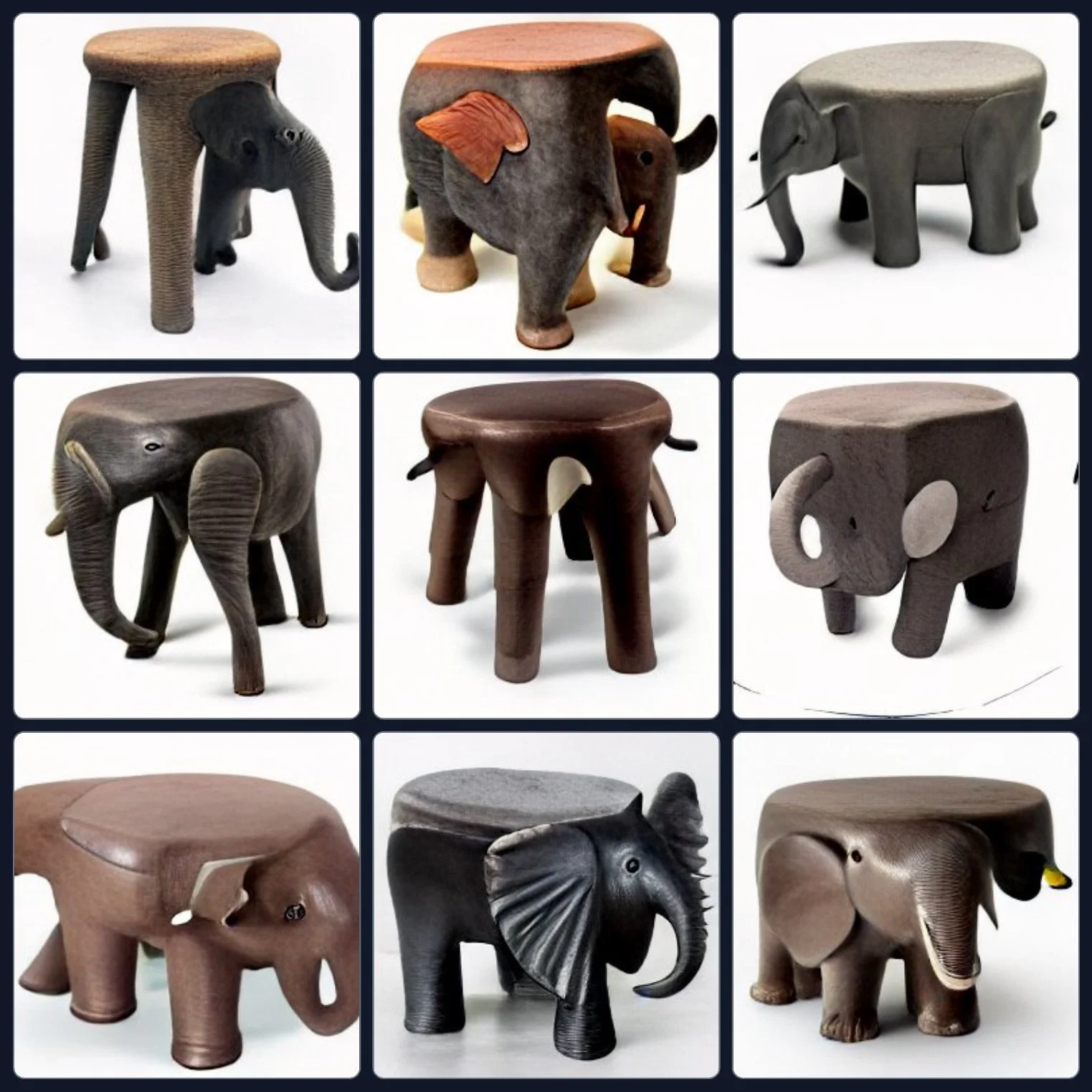
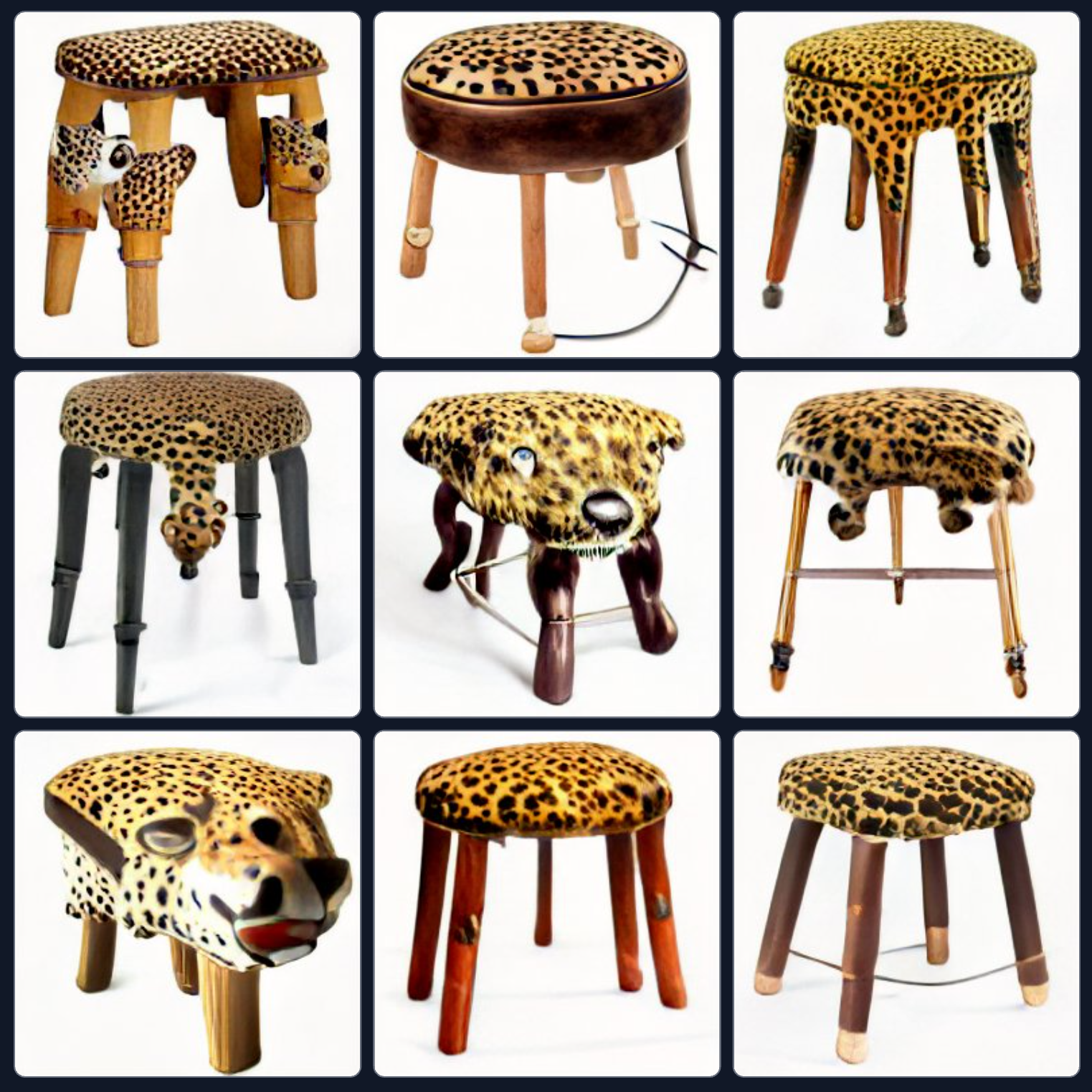
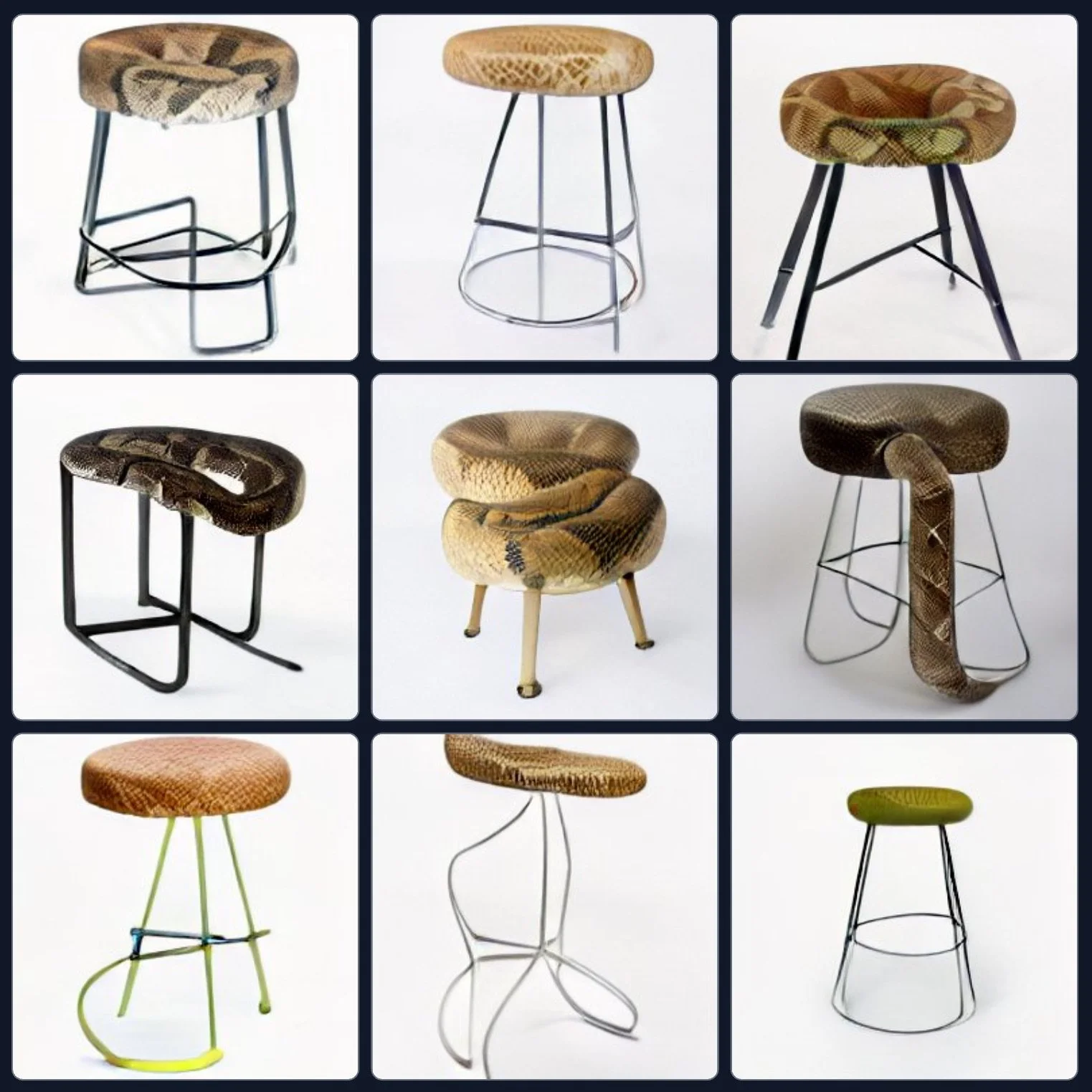
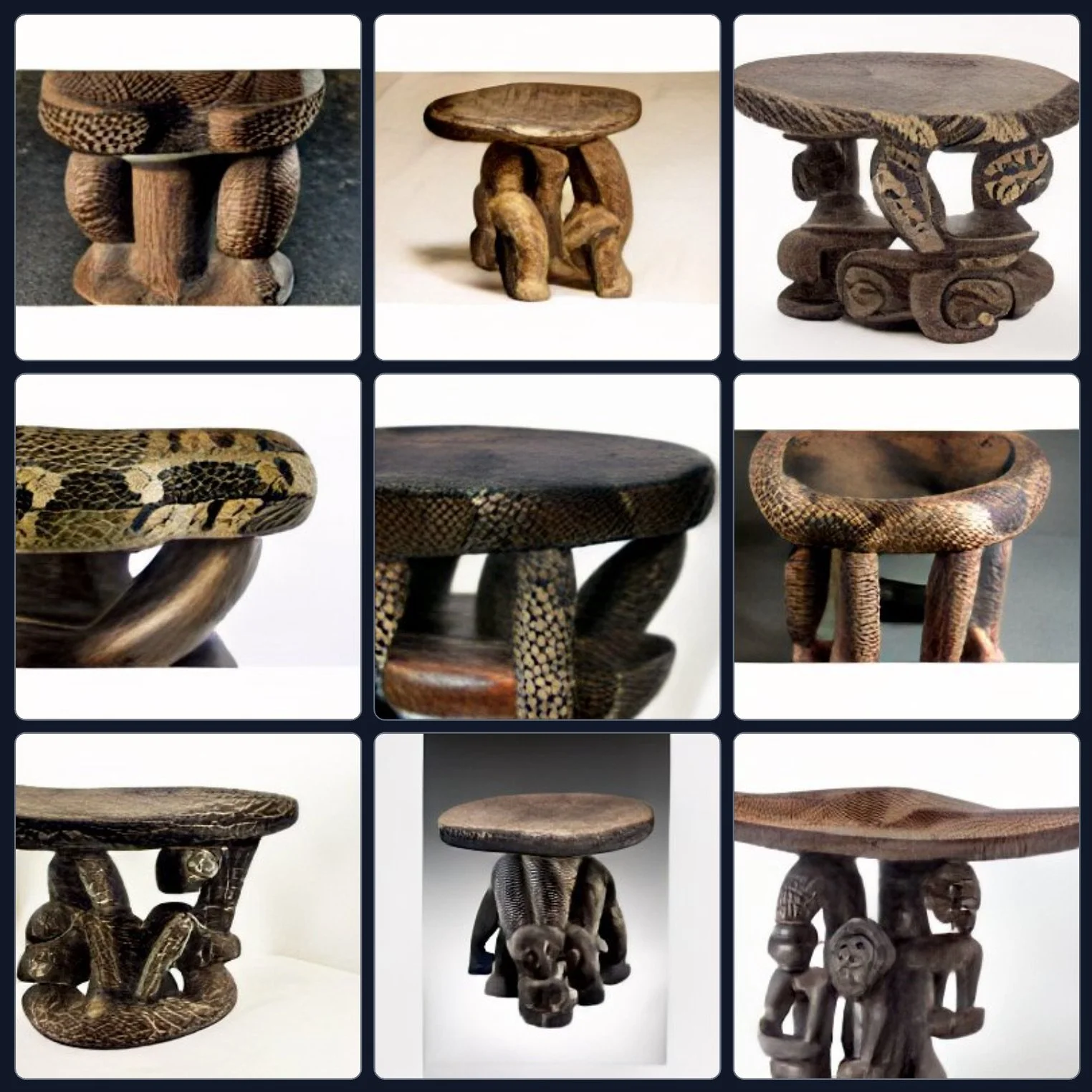
The initial results showed an immediate bias, best indicated by the marble caryatid, steel python, furry leopard and leather elephant stools. Updating the prompt to include a material, frames the results. The material of choice. wood, is the most popular material across regions composing 67/67 of the catalog items. The prompt update results in, [Symbol] [Material] Stool:
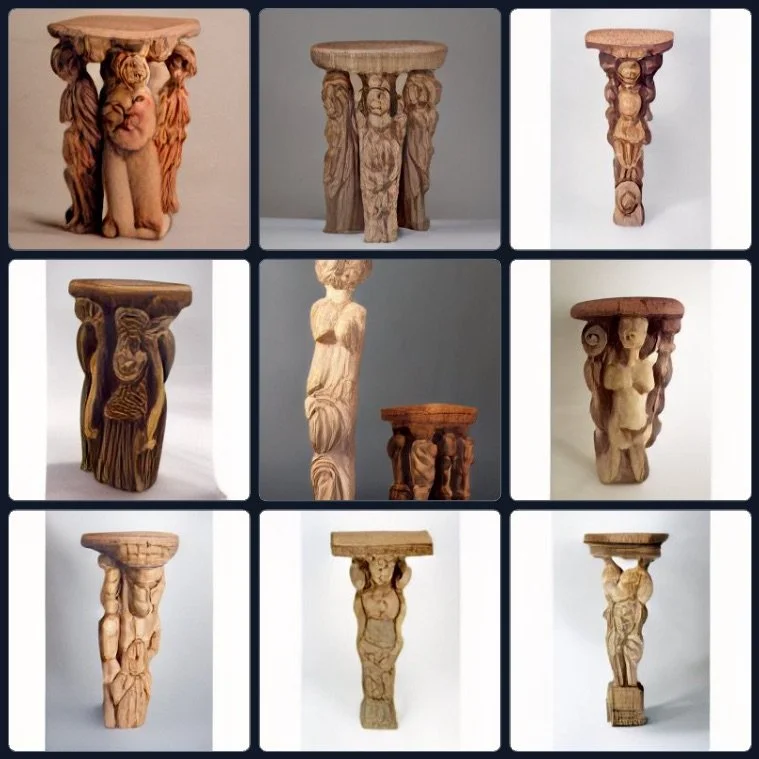
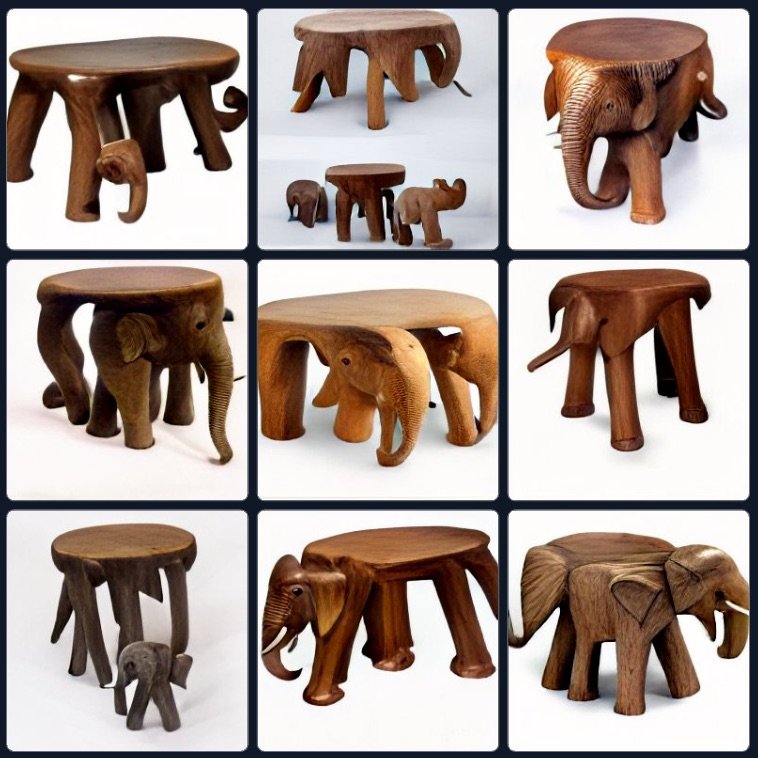

Adding a region further refines the results. The choice was “Cameroon” so as not to be too broad (eg: “Africa”) nor too specific (eg: Bamum). The prompt becomes, [Symbol] Stool [Region] [Material]:

3. Prototypes
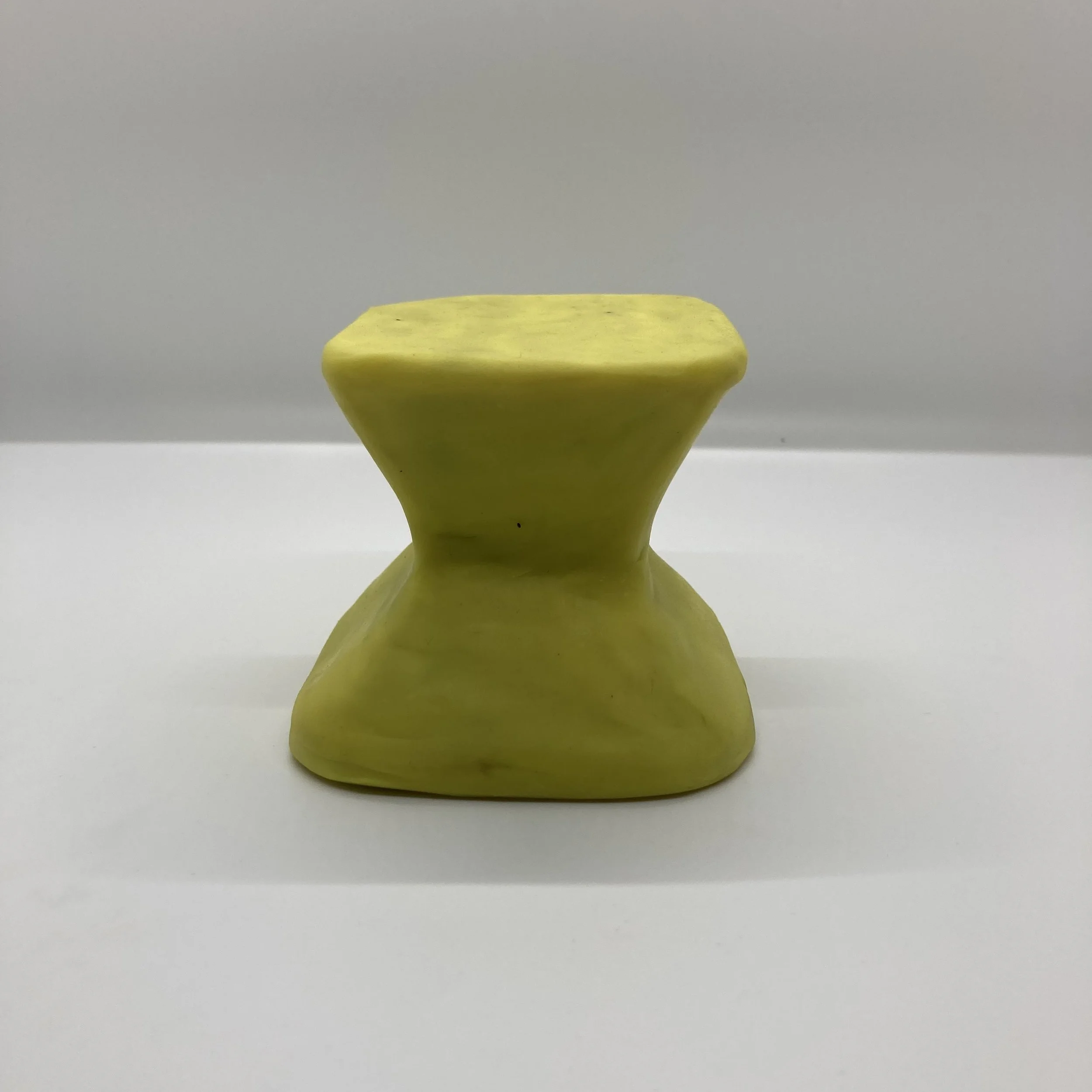
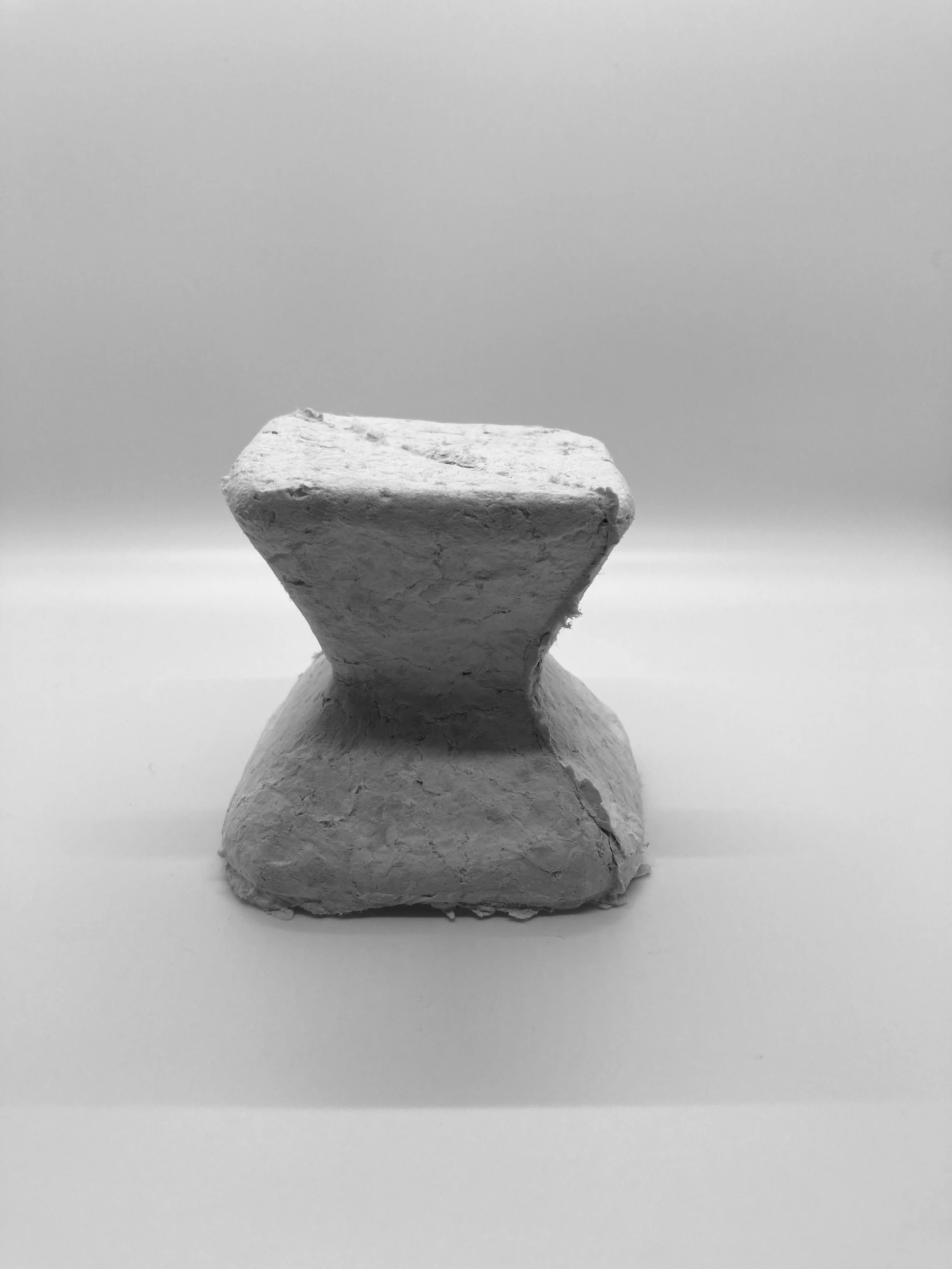
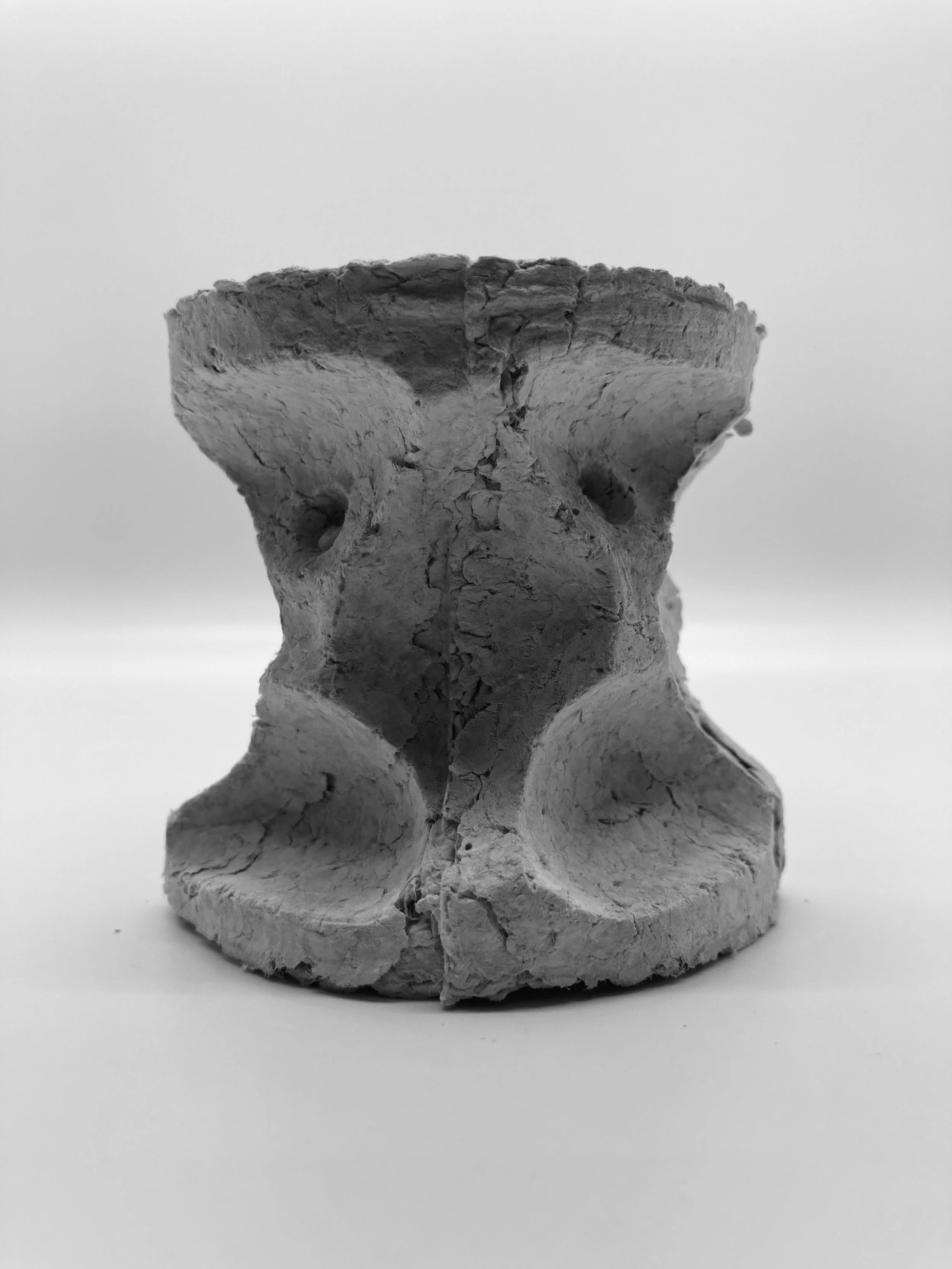
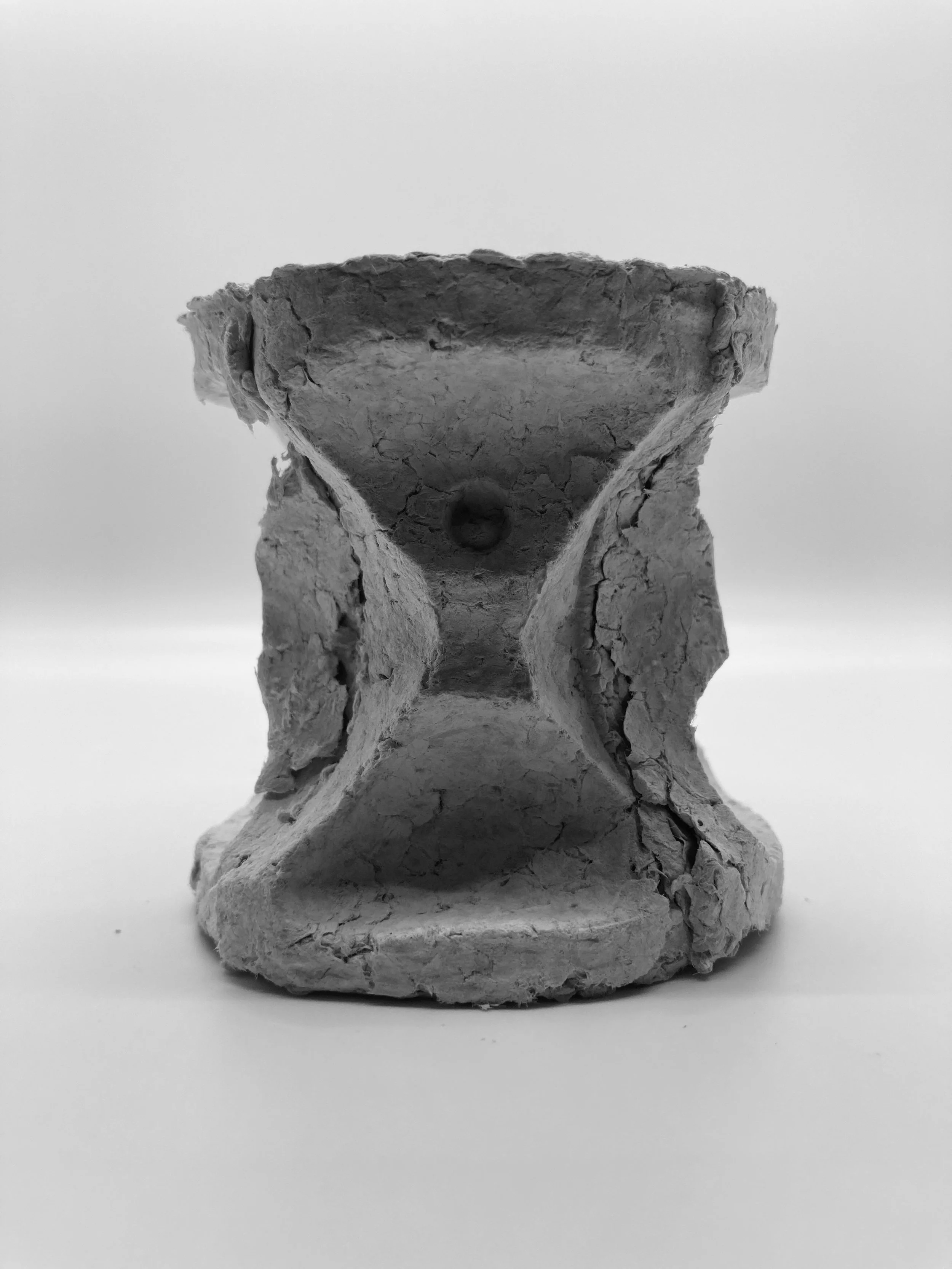
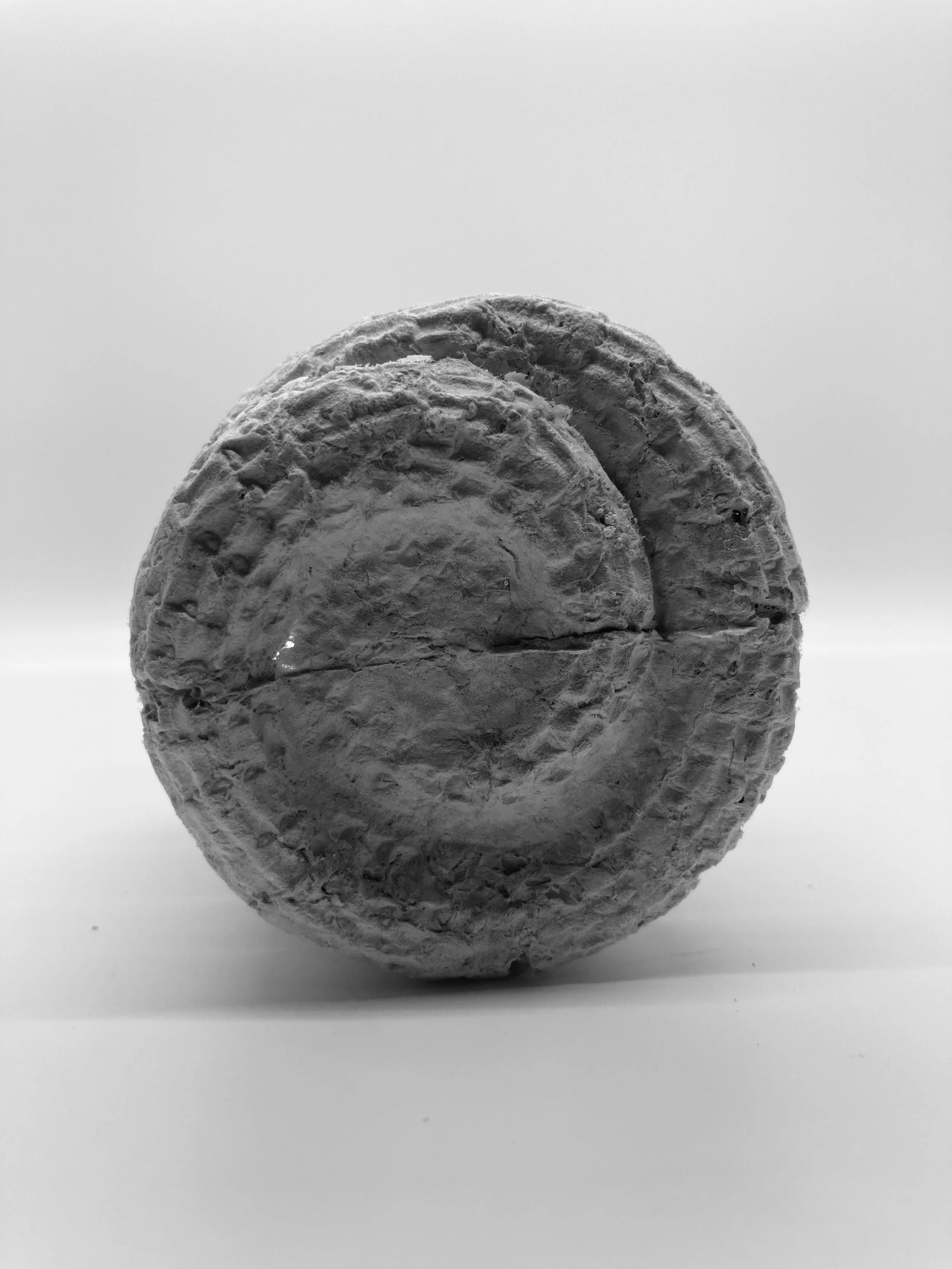
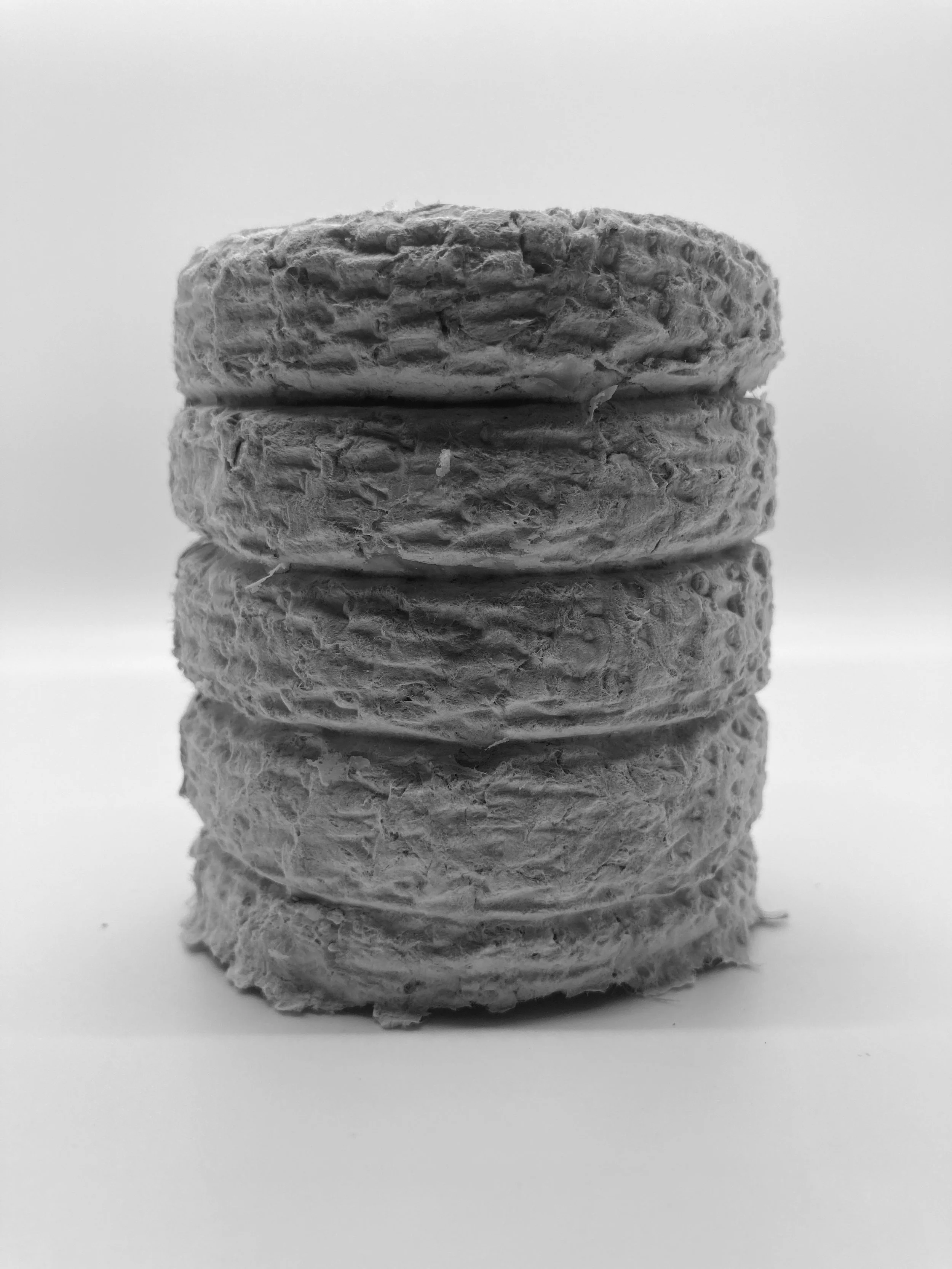
The Statistics and Renders phases inform the Prototypes. A feature is taken from DALL-E Mini, an Artefact, and both. The material, wood fiber, is a derivative of the most popular material, wood. The fiber is designed for the four symbols:
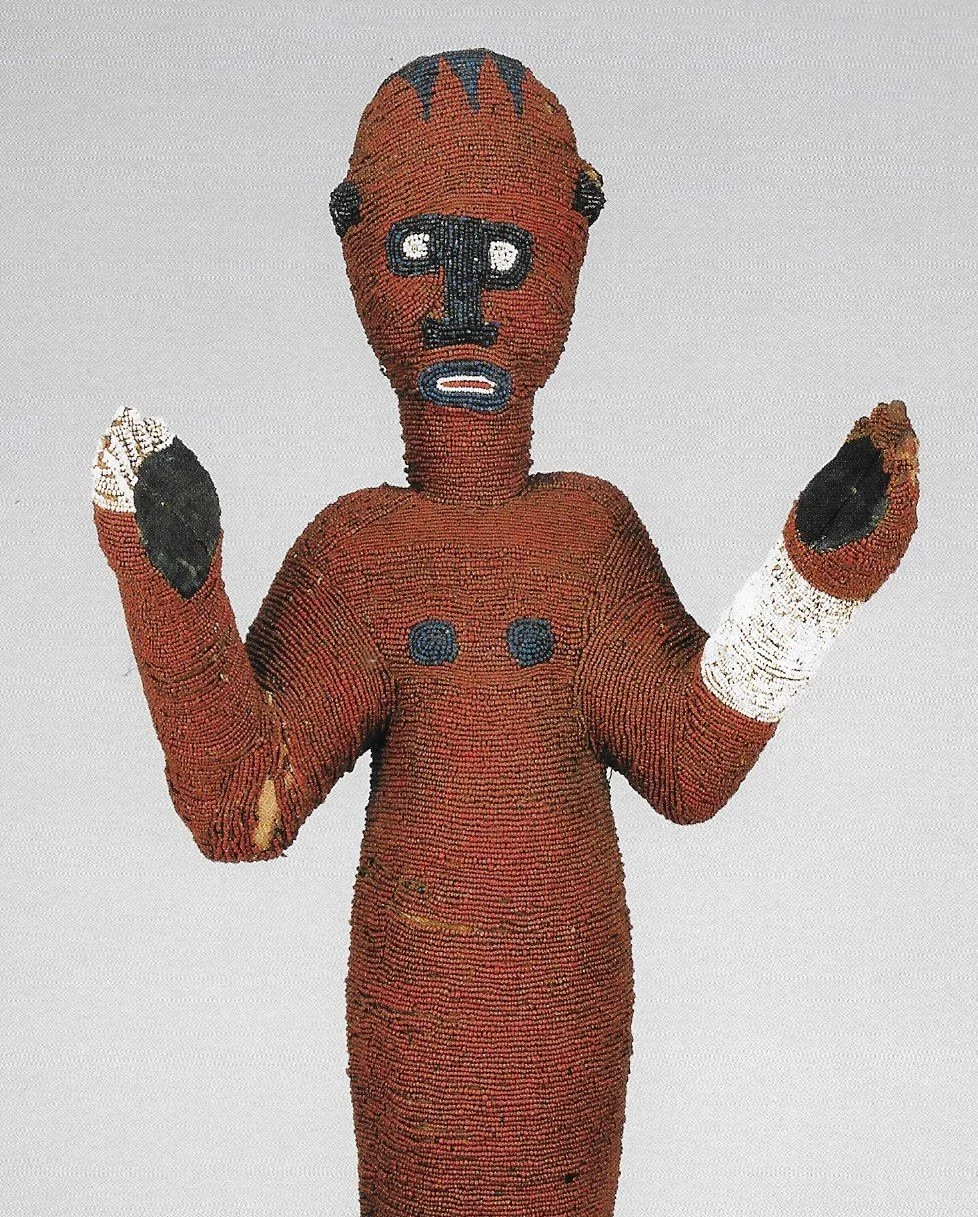
People (Caryatid)
Python
Leopard
Elephant
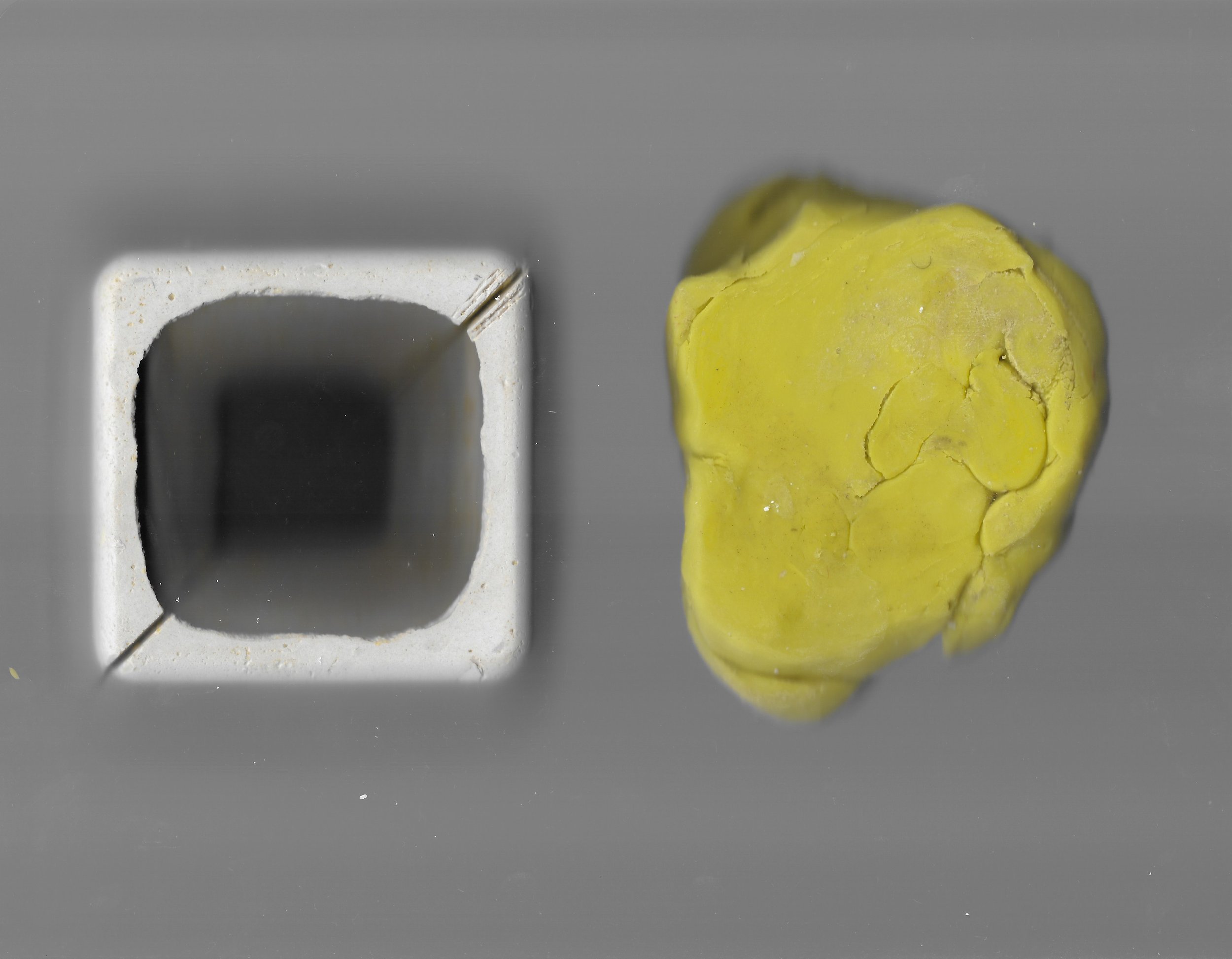
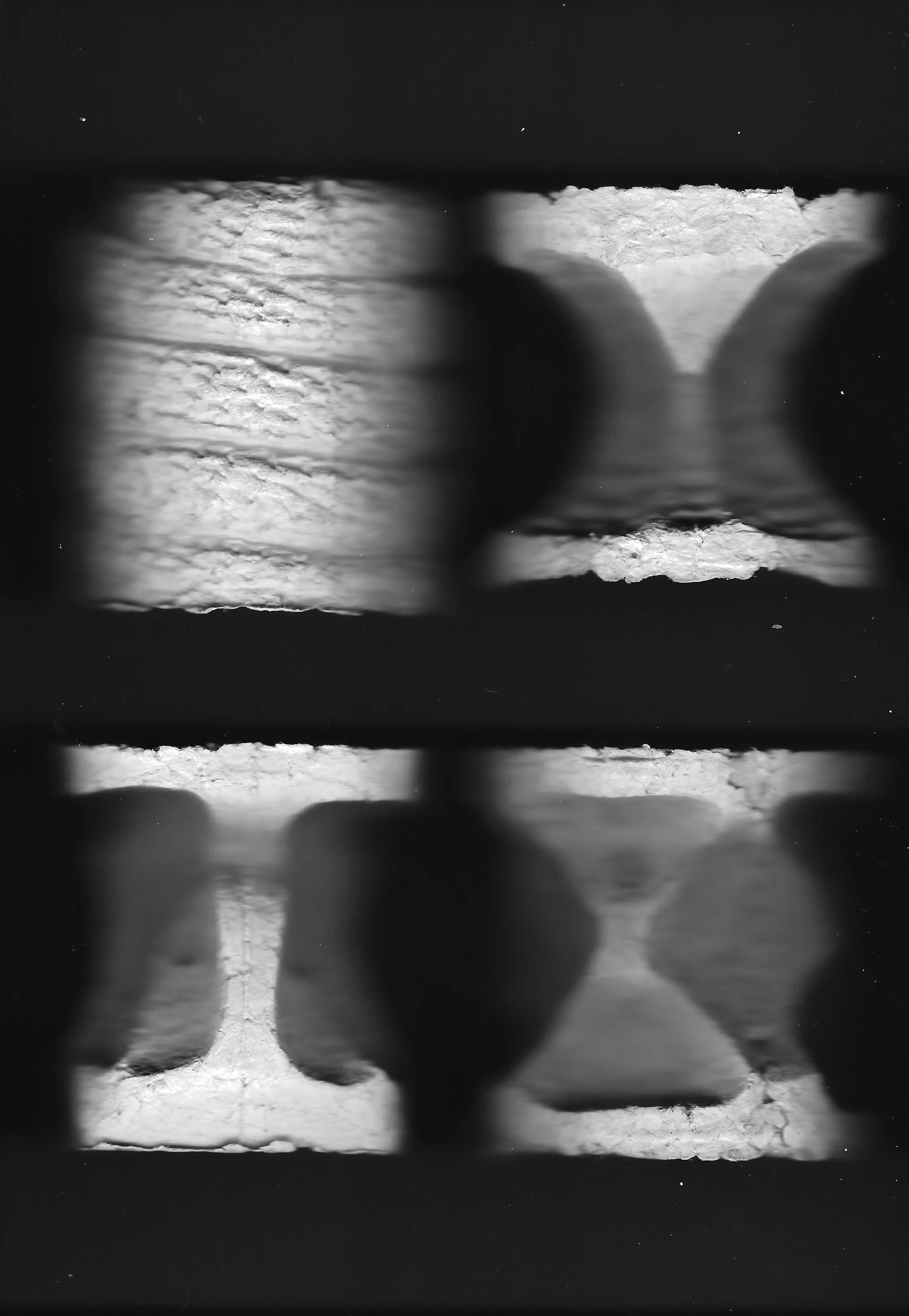
The prototypes were made by following four steps illustrated below:
People (Caryatid)
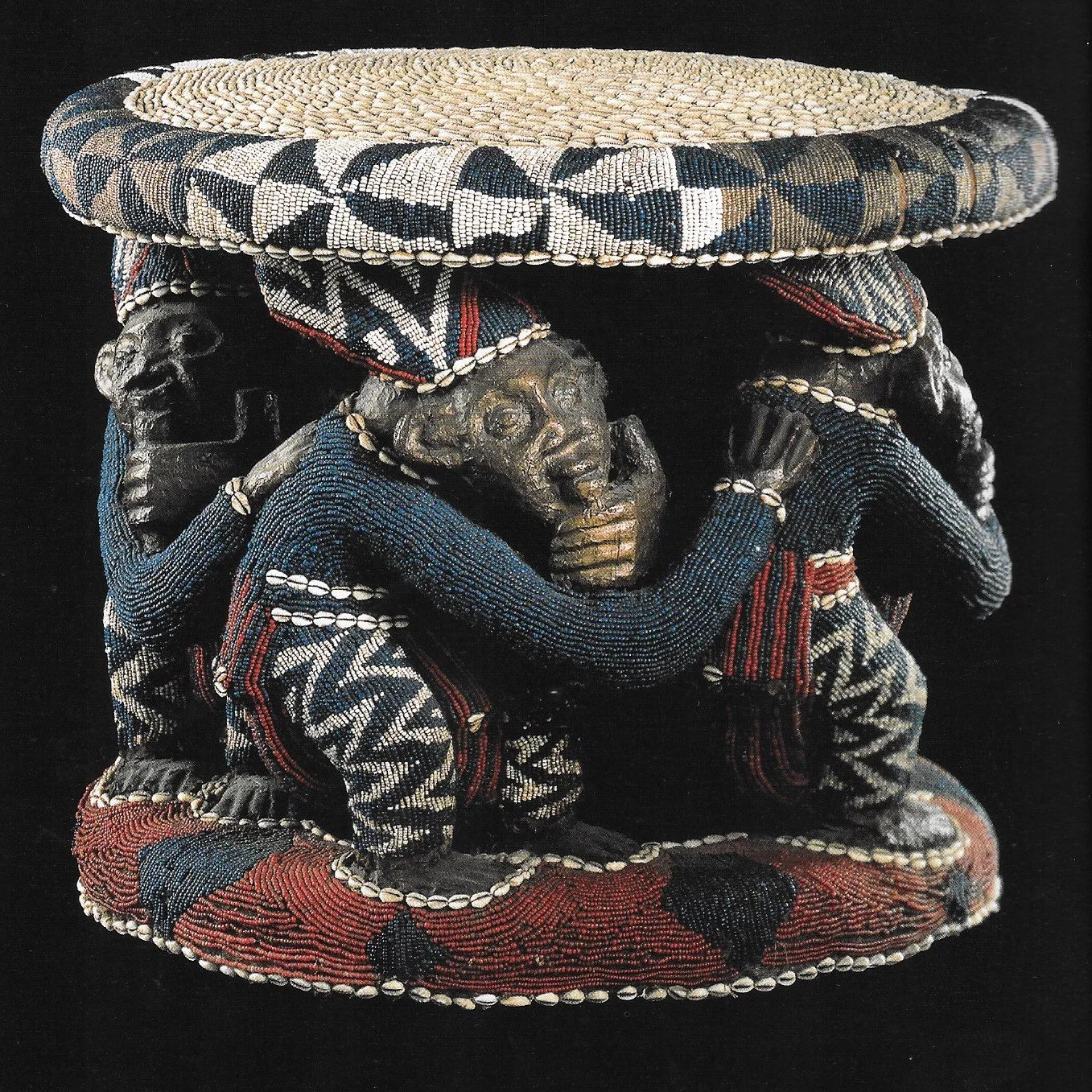
Elephant
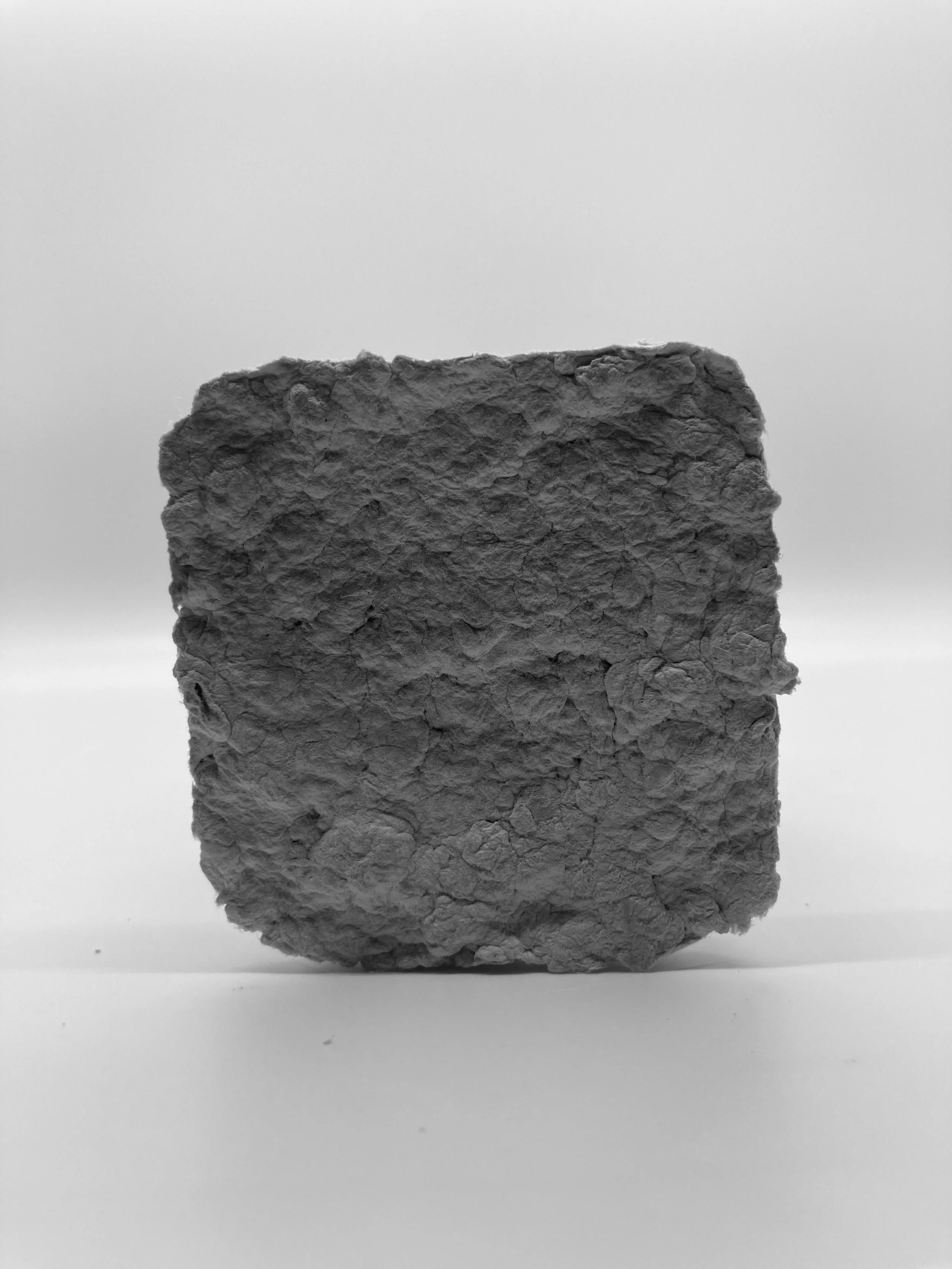
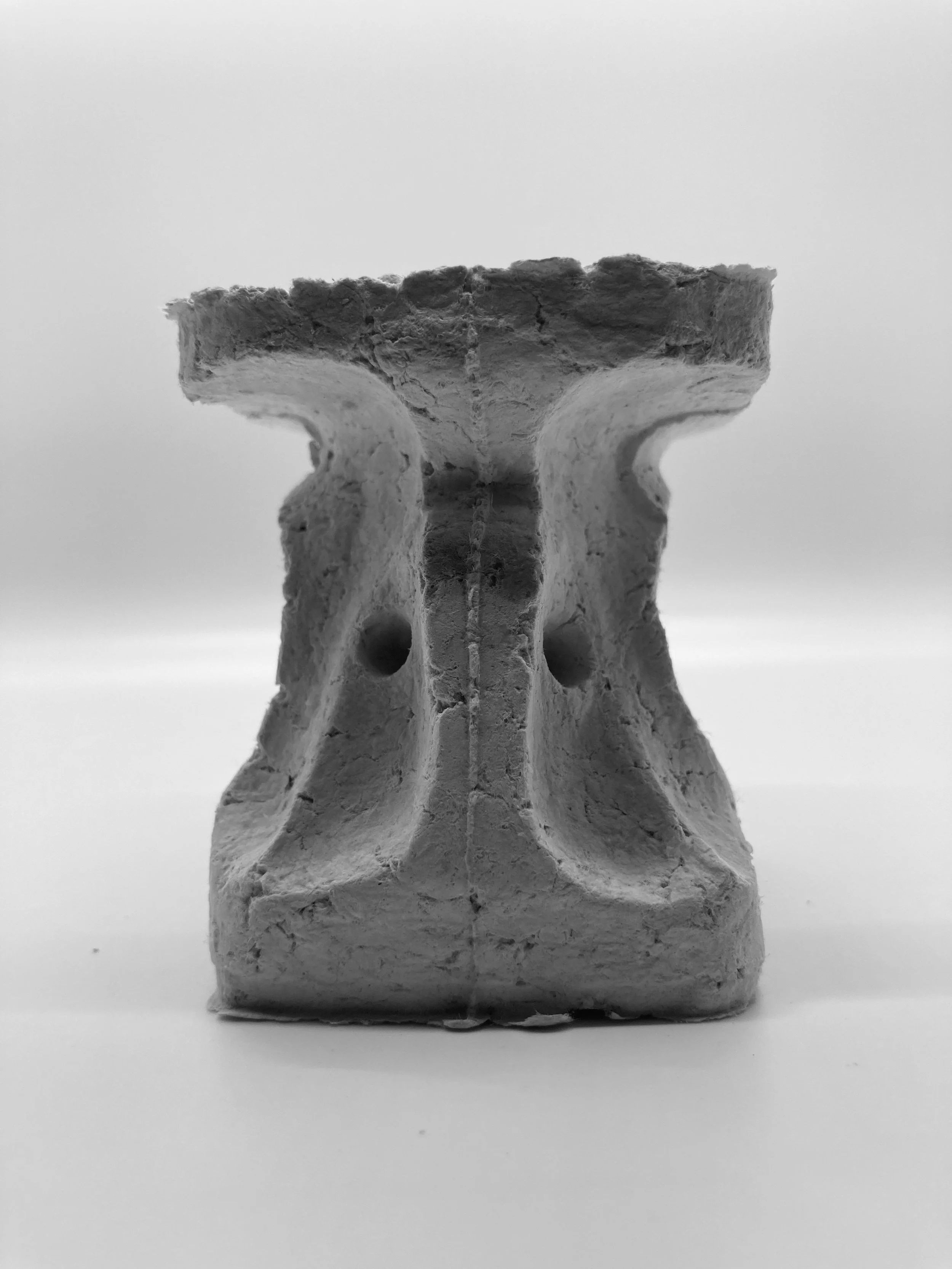
Leopard
Python
Discussion
The prototypes are distillations of forms found in the furniture of the Grasslands confronted with machine-generated images.
The research provides a continuum for Grassland motifs in design. Applying technologies such as A.I rendering widens the possibilities. Simultaneously, techniques such as quantifying attributes deepen interpretations.
Overcoming limitations such as the size of the catalog and the quality of the renders can improve the research. The catalog being limited so far to 70 items creates a narrow data set for concrete determinations to be made. The data source being images rather than objects limits the materials and symbols that can be collected.
Further Research
Technological follow-up is exploring more machine components such as DALL-E mega, Midjourney, or NightCafé.
Methodological follow-up is improving the catalog quality and quantity, as elaborated upon above.
Conceptual follow-up involves developing the prototypes into full-scale models. Along with the full-scale models would be further explorations in materials such as raffia, beads, and more.
Acknowledgements
Prof. Claudia Blümle, Christof Windgätter, Laurence Douny, Natalija Miodragovic, Nina Samuel, Emile de Visscher, and Alexandre Mballa-Ekobena
References
Beumers, Erna, and Hans-Joachim Koloss. Kings of Africa: Art and Authority in Central Africa: Collection Museum FÜR völkerkunde Berlin. Maastricht: Foundation Kings of Africa, 1992.
Clarke, Christa, and Rebecca Arkenberg. The Art of Africa: A Resource for Educators. New York: Metropolitan Museum of Art, 2006.
Falgayrettes-Leveau, Christiane. Design En Afrique: S'asseoir, Se Coucher Et rêver. Paris: Musée Dapper, 2012.
Geary, Christraud M., and Pierre Saint-Jean. Bamum. Milan: 5 continents, 2011.
Geary, Christraud, and Lorenz Homberger. Cameroon: Art of the Kings. Zürich: Museum Rietberg, 2008.
Gebauer, Paul. Art of Cameroon: With a Catalog of the Gebauer Collection of Cameroon Art at the Portland Art Museum and the Metropolitan Museum of Art. Portland: Portland Art Museum, 1979.
LaGamma, Alisa. Genesis: Ideas of Origin in African Sculpture ; in Conjunction with the Exhibition Genesis: Ideas of Origin in African Sculpture, Held at the Metropolitan Museum of Art, New York, from November 19, 2002, to April 13, 2003. New York: Metropolitan Museum of Art, 2003.
LaGamma, Alisa. Heroic Africans: Legendary Leaders, Iconic Sculptures ; Issued in Connection with an Exhibition Held Sept. 20, 2011-Jan. 29, 2012, Metropolitan Museum of Art, New York, and at the Rietberg Museum, Zürich, February 26-June 3, 2012. New York: Metropolitan Museum of Art, 2011.
Mana, Haman, and Mireille Bisseck. Rois Et Royaumes Bamiléké. Les Éditions du Schabel, 2010.
Tishman, Ruth, Paul Tishman, and Susan Vogel. For Spirits and Kings: African Art from the Paul and Ruth Tishman Collection. New York:
Metropolitan museum of art, 1981.Webb, Virginia-Lee. Perfect Documents Walker Evans and African Art, 1935. New York: Metropolitan Museum of Art, n.d.
Smook, G. A. Handbook for Pulp & Paper Technologists: Peachtree Corners, GA: Tappi Press, 2016.
By Maxime Mballa-Tagny.
Learn more about the author